
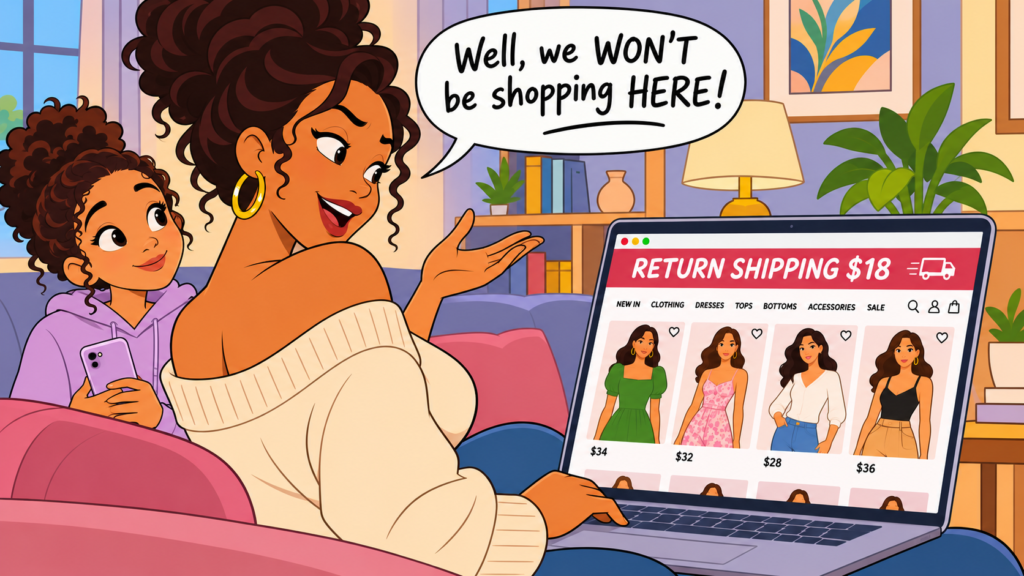
Online retailers see returns as a cost problem. Customers often see them as part of the deal.
My wife literally chooses where to buy clothes online based on the return policy.
It makes perfect sense, right?
Fit is uncertain, shipping is frigging expensive, and one bulky return can cost as much as the item itself.
A fresh new study in the Journal of Retailing and Consumer Services shows how powerful that calculation can be.
Researchers presented 506 regular online fashion shoppers with return fees ranging from free to €0.99, €2.99 and €4.99. (About US $1.10, $3.35 and $5.60.)
As fees increased, so did customers’ intention to switch retailers.
And emotional attachment to the retailer only softened the effect of the tiny €0.99 charge.
At €2.99 and €4.99, loyalty offered no meaningful moat.
Consumers didn’t only hate the larger fees. They saw them as a brand transgression, essentially a violation of what they expected from the relationship.
That’s rough for retailers because the economics are just brutal.
Fashion return rates can reach 75%, and free returns encourage purchasing while also increasing return activity and handling costs.
This connects directly to something I discuss in I Need That: desirability has to survive real-world economics.
Customers will behave according to their wallets.
My wife isn’t EVER mathing out if the retailer can afford her return.
She’s deciding which store gives her the safest, easiest, most complete purchase experience. Pure and simple.
And I do exactly the same thing. Bet you do too.
That leaves retailers with a tough job: make buying sufficiently risk-free without making the business financially irrational.
Charging everyone could drive customers away. Free returns for everyone can turn great sales numbers into rotten economics.
The researchers suggest differentiated policies, including loyalty benefits and fees based on purchase history or return behaviour.
That’s the more pressing answer.
A return policy isn’t some pesky administrative detail after the sale.
For plenty of customers, it helps determine if there’s even gonna be a sale.
If you’d like help creating and marketing products people feel compelled to buy, the product marketing consultants at Graphos Product can help.