
The big shift here isn’t price or e-commerce capability. It’s buyer psychology.
The average home in the U.S. now costs north of half a million bucks.
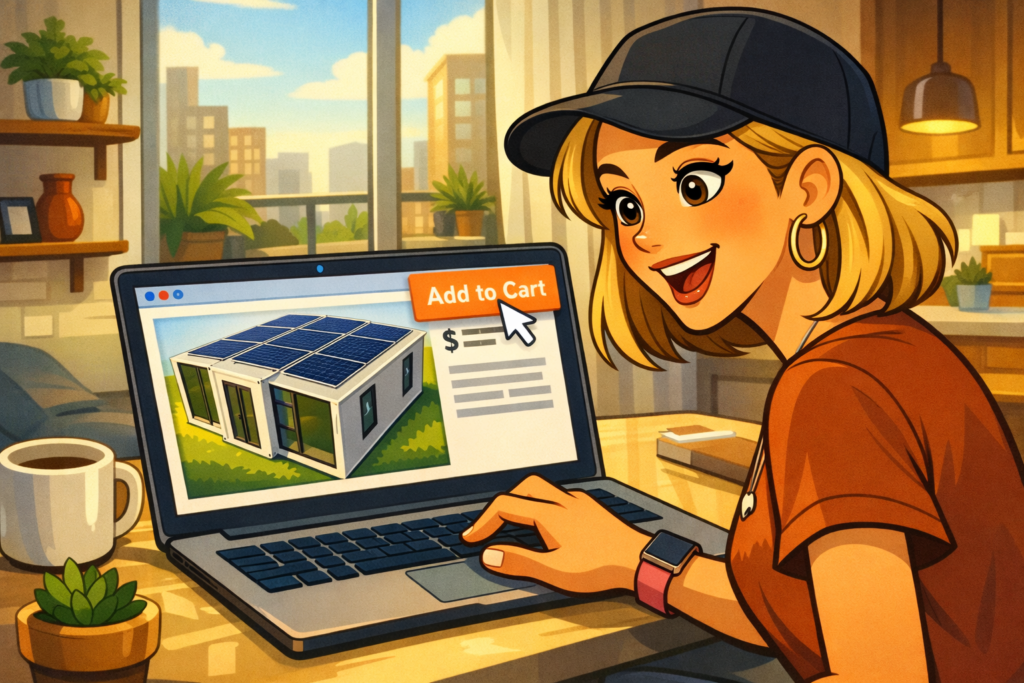
On Amazon, I just added one to my cart for under ten grand.
This ain’t no dollhouse, people.
It’s a steel-framed prefab tiny house with fold-out double-wing walls, pre-installed plumbing and electrical, a bathroom, kitchen, insulation, and layout customization up to 40 feet.
And yep, I clicked “Add to Cart,” just to say I did.
(Maybe don’t tell my wife.)

We are definitely not moving in next week.
But that click sorta matters.
Without giving it a ton of thought, we are watching something culturally sacred shift mental categories, and it’s never going back.
A house has historically lived in the realm of mortgages, inspections, negotiations, and contractors. Now it sits inside the exact same interface as headphones and air fryers.
When something becomes a SKU, it becomes comparable. Reviewable, configurable, return-eligible.
This one is all those.
That reframes expectations across categories.
If housing can be presented with bullet points, delivery timelines, and checkout friction measured in clicks, consumers start asking why everything else FEELS harder.
I believe this is less about affordability and more about product logic invading asset classes.
Productized services were the beginning.
Cars followed.
Now shelter.
The takeaway for smaller product makers and marketers is inconvenient but useful: your buying experience is now being compared to purchasing a house.
If your product is somehow harder to evaluate, configure, or commit to than a prefab Amazon home, friction is not your friend.
The cart has grown up.
Has your business?
Want to make your product irresistible? That’s what we do as product marketing consultants at Graphos Product, helping innovators turn need-driven ideas into market-ready successes.