
The fastest way to destroy a good product is to slowly make it worse to squeeze out more profit.
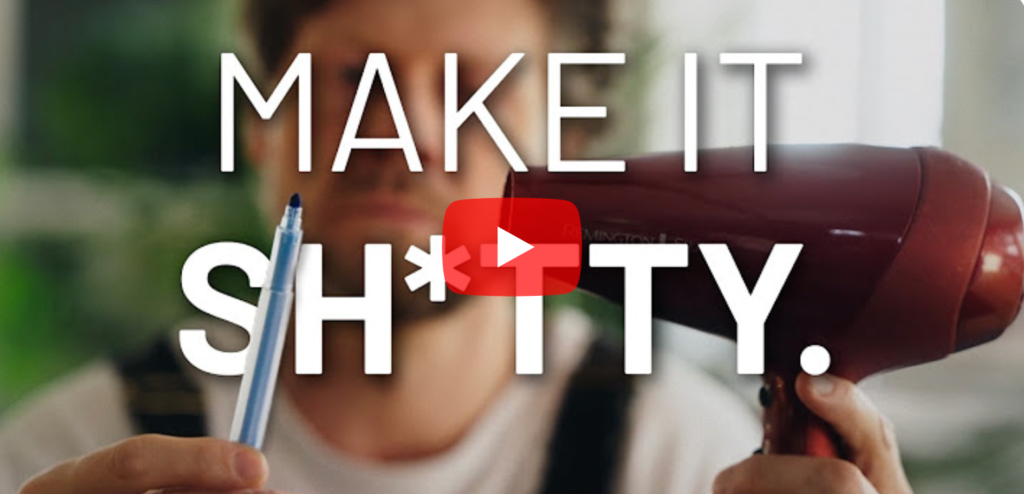
A short video from the Norwegian Consumer Council has been circulating widely this week.
It’s called “A Day in the Life of an Ensh*ttificator.”
The premise is simple, and immediately relatable from a buyer perspective.
A man goes to work each morning with one responsibility: making products worse.
He adds advertisements to services people already pay for.
He replaces human support with chatbots.
He pushes software updates that slow down devices.
He converts any good product features into paid subscriptions.
In the final scene, even basic car functions (i.e. heat, radio, brakes) require monthly payments before they will work.
The joke lands well because the audience clearly recognizes the pattern as truth.
And we despise the heck out of it.
Author Cory Doctorow gave this phenomenon a name: ensh*ttification.
First a product launches and works beautifully.
Then users get locked in, through network effects, data, or switching costs.
Only after that lock-in do the degradations begin: higher prices, ads everywhere, missing features, subscription layers.
It started with software. And now can see it in the physical world too.
BMW tried charging a monthly subscription to activate heated seats that were already installed in its vehicles, only dropping the idea when customers freaked out.
And now Ford has introduced a new one.
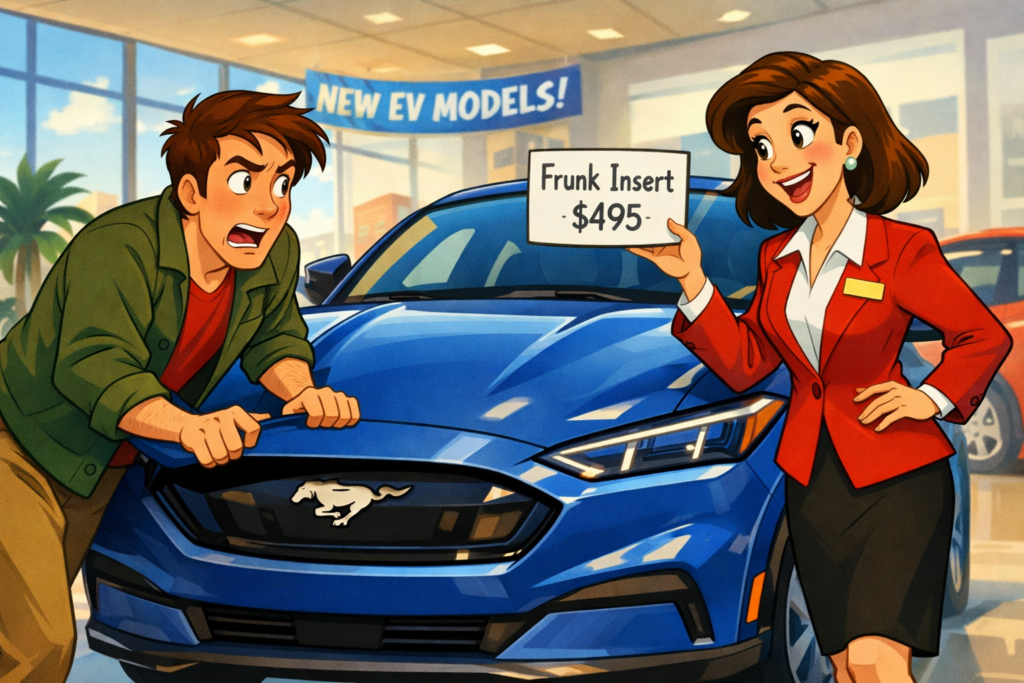
For the 2026 Mustang Mach-E, buyers have to pay US $495 to turn the under-hood space into the usable frunk that came standard for five years.
Ford says the change came after learning that lots of owners weren’t using the space.
Buyers see something else: a feature that used to be standard, suddenly becoming an extra cost.
Technology simply makes the pattern easier to scale.
But the concept isn’t entirely new.
It’s an extension of planned obsolescence, except this version hits your wallet while you use the original product.
The pill for product makers to swallow is a sticky one, because margins are always squeezed away.
Short-term extraction is always tempting once customers are captured, especially with purchases that are few and far between (or with dramatically reduced maintenance revenue, like EVs).
But every small degradation heavily erodes trust.
And trust is the ONLY product advantage that compounds over time.
What small change to your product might your customers interpret as the first step toward enshittification?
If you hear rumblings of “nickel-and-diming,” you’re probably doing it.
Want to make your product irresistible? That’s what we do as product go-to-market experts at Graphos Product, helping innovators turn need-driven ideas into market-ready successes.