
Loyalty can stall because the product works too well.
My wife and I were talking yesterday about Peloton. We’ve had our bikes for six years now.
They work great. No complaints. No big urgency to upgrade.
And THAT there’s the business problem.
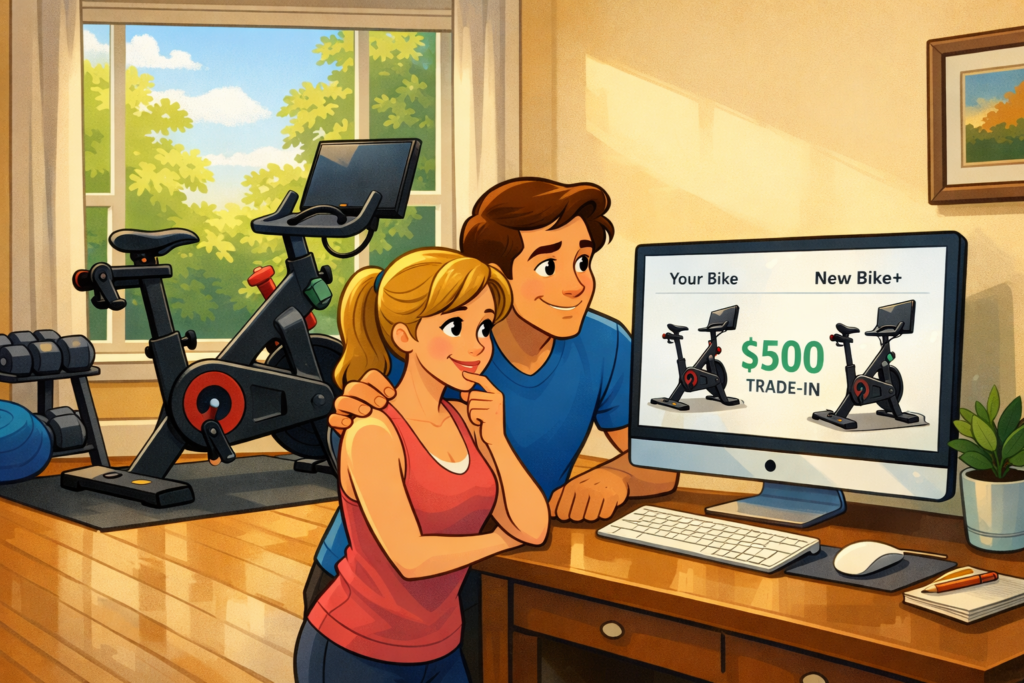
We wondered why Peloton doesn’t offer a buy-back or trade-in program, like Levi’s, Zara, LuluLemon and Apple do.
Not as a sustainability thing, but an upgrade accelerator.
I suspect the fear is resale cannibalization.
If used bikes flood the market, new sales will suffer, right?
But those bikes end up on Facebook Marketplace anyway.
The difference is who’s in control.
When resale happens elsewhere, Peloton loses the signal. They don’t see who is ready to upgrade, what price unlocks movement, or how durability affects lifecycle timing.
So customers like us stay put. Others may go to NordicTrack.
The brand starves itself of its most loyal and motivated buyers.
In 2026, brands that own resale are learning something important.
Resale should be the middle, not the end of the relationship.
When buyers know a product has future value, and the process is laid out for them, they commit sooner.
When resale is designed in, longevity becomes a benefit instead of a liability.
And when value-constrained buying dominates, upgrade paths matter way more than novelty.
Want to make your product irresistible? That’s what we do as product marketing consultants at Graphos Product, helping innovators turn need-driven ideas into market-ready successes.