
You know a shift got real when a “timeless” product finally gives in.
I like me a game of Monopoly.
My girls do too.
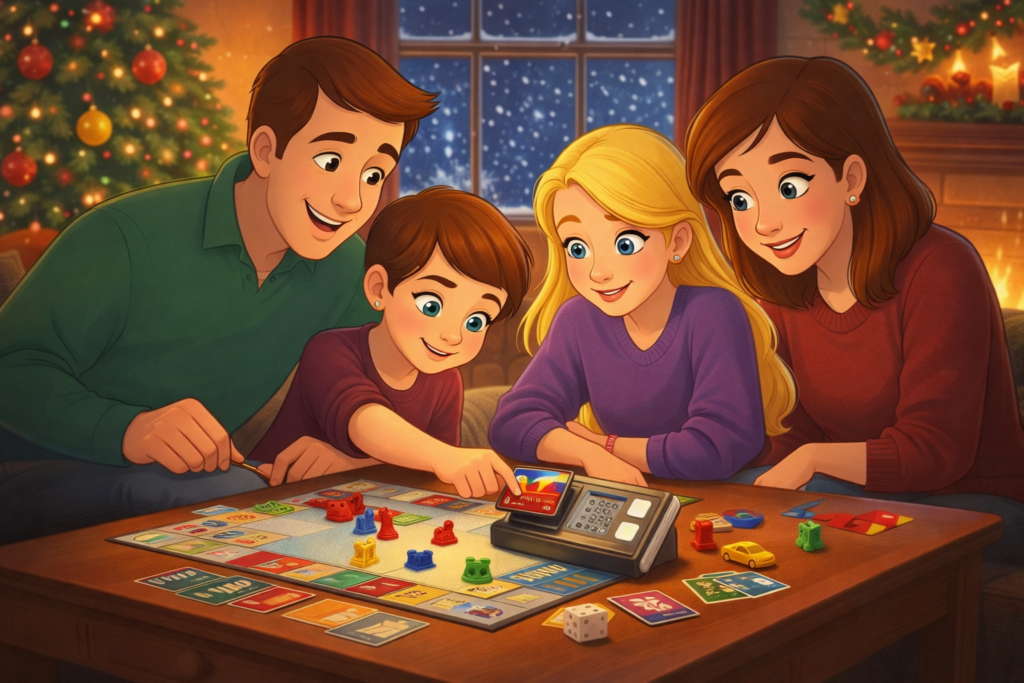
So I had mixed feelings when I discovered Monopoly Super Electronic Banking Board Game, complete with an electronic banking unit, tap technology, rewards cards and NO physical cash at all.
No one playing banker, and no stacks of colorful paper changing hands.
Part of me rebelled against it instinctively. (I still feel that pushback while writing this.)
Monopoly is supposed to teach MONEY, right?
Counting. Saving. Risk. Loss.
Brutal capitalism for one and all.
Then I realized that reaction is exactly the point.
When a game this old and beloved abandons cash, it is conceding reality.
Kids will grow up tapping, not counting bills.
Watching balances of dollars and crypto change on screens, never sliding cash across a table.
Money is almost completely digital. Even in gameland.
That makes the transition feel official for some reason.
Last week I even heard comedians on CBC Radio joking about the update.
When asked about the biggest, most realistic change, one quipped, “you can no longer buy a house.”
Funny. Also uncomfortably on the nose.
For product makers, this is the real lesson.
Legacy products survive by deciding which parts of their identity are sacred and which are scaffolding.
Monopoly kept the feeling of tension and competition, while quietly teaching the new version of money.
Your buyers face the same fork.
Old way or new way.
Comfort or relevance.
The product that helps them prepare for what is coming usually wins.
Want to make your product irresistible? That’s what we do as product marketing consultants at Graphos Product, helping innovators turn need-driven ideas into market-ready successes.