
Most products fail because they tell instead of show.
A client came to us a few years ago with a barbecue product and a polished, high-production video already produced.
When we pushed that video out in ads, it looked great, but the damn thing didn’t convert. People just weren’t compelled to buy after seeing it.

There was no budget to reshoot, so we worked with what we had: some simple but good-quality recipe clips.
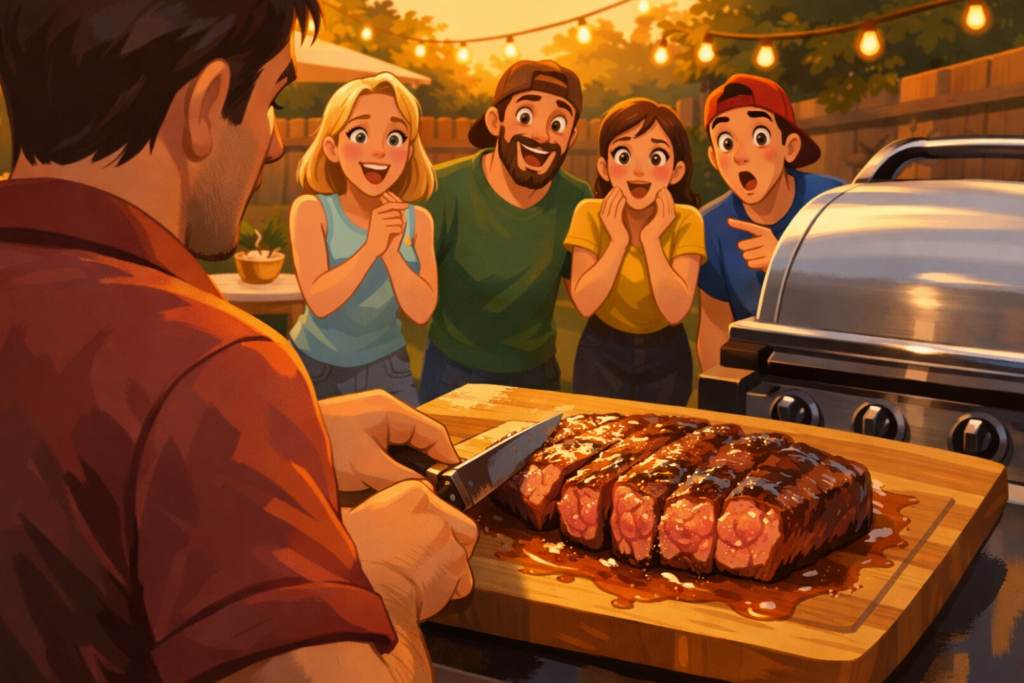
Real grill, actual food, stimulating sound. We took the best one (marinated ribeye steak) tightened the edit, amped up the sizzle … and focused on the big moment:
A knife cutting into a juicy, perfectly cooked steak.
Within a few months, the product went from almost zero sales to 180 tons sold.
Same product, same audiences. And a totally different outcome.
It worked because buyers don’t trust claims. They DO trust what they can see, especially when it makes them drool.
This pattern shows up repeatedly. A fishing lure sells when you see fish strike it. A blender proves itself by destroying super-hard objects on camera. And a guitar device gets traction once trusted and respected players demonstrate it.
When proof is clear, the decision becomes so much easier.
But there’s a second layer I talk about in the new podcast episode.
That same barbecue product eventually stopped selling online. And not because demand dropped, but because complicated times FUBAR’d the economics. Steel prices rose, freight costs surged, and margins went negative.
The launch marketing worked amazingly. The business model was great, until it was the opposite of great.
Obviously, both matter.
This morning I released a new episode of Product: Knowledge breaking this down, including the role of proof, skepticism, and the one thing you still can’t possibly get from AI.
I’d love if you checked it out. Let me know what you think!
Want to make your product irresistible? That’s what we do as product marketing consultants at Graphos Product, helping innovators turn need-driven ideas into market-ready successes.