
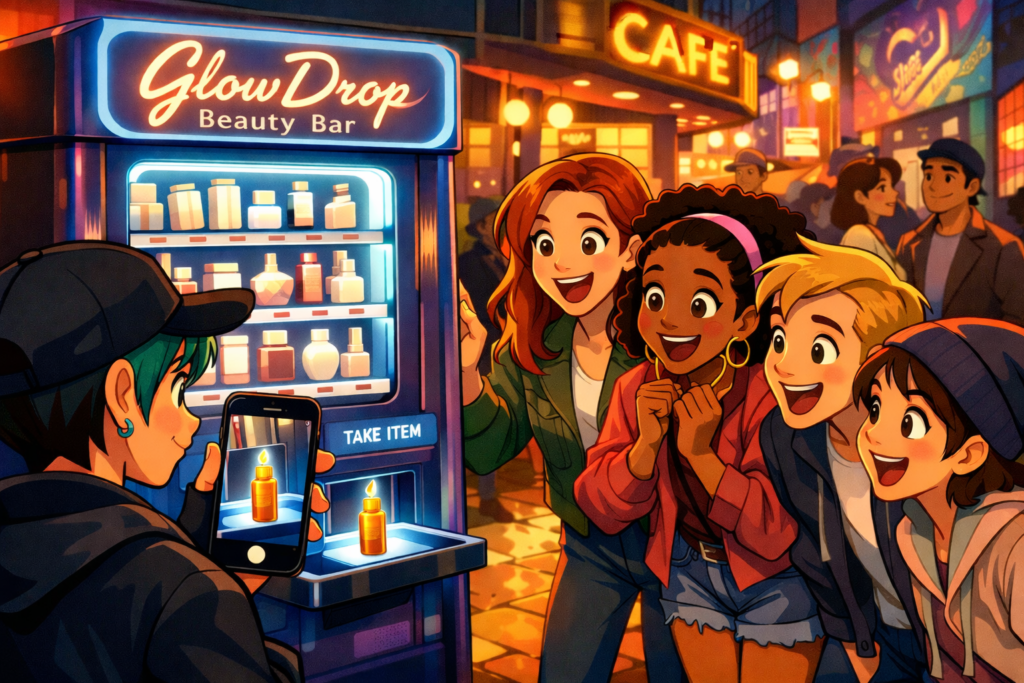
Some distribution channels are designed to sell. Others, to SPREAD.
I’m working with a client on a fun vending machine product. I won’t share details quite yet, but it has helped me think differently about what distribution is actually for.
Then I came across what Liliosa is doing.
A lingerie brand built on TikTok traction started selling through vending machines and pop-ups tied to cultural moments like International Women’s Day.
On the surface, it mostly looks like omnichannel. Online meets offline, content meets retail, right?
Nope. That’s not the crux of it.
This is loop design.
Liliosa’s content creates curiosity. That curiosity sucks people toward a physical experience. The experience itself is surprising enough that people record it, share it, and chat about it.
That content then feeds the next wave of attention. (That’s the loop.)
The vending machine is all about novelty and reaction. Taking human sellers out of the transaction feels magical to buyers.
The pop-up is there to make moments that feel worth capturing. It’s a brief, fleeting opportunity, and creates FOMO.
And so, distribution becomes part of the product experience.
This is where a lot of brands are still thinking way too narrowly. They ask WHERE they should sell, when maybe the more useful question is what kind of interaction their product can most effectively catalyze in the real world, today.
For physical product makers and marketers, this cracks open a different approach:
A machine, a temporary space, or a small retail footprint can be designed to generate attention first, with sales following naturally.
What part of your distribution could become a thing people want to show off to someone else?
Want to stop guessing what your customers actually care about? That’s what we do as product marketing consultants at Graphos Product, uncovering real buyer insights through structured interviews that drive better positioning and faster adoption.