
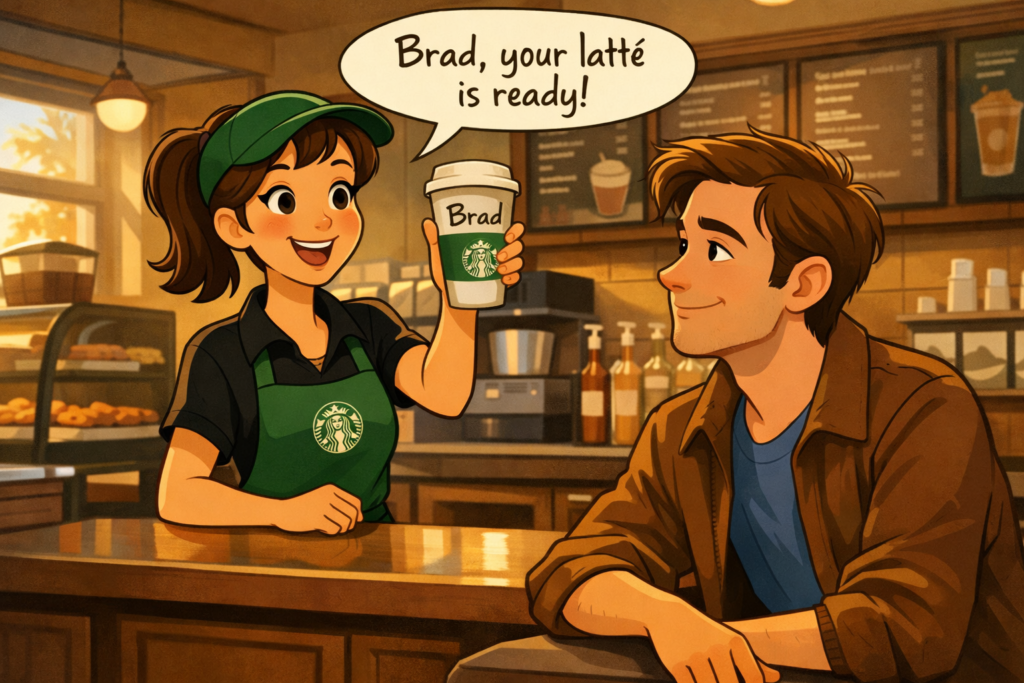
Success is dependent on whether the buyer feels recognized, reduced … or even abused.
Researchers call it the Starbucks Effect.
Across five experiments, people showed dramatically stronger preference for bakeries, cafés, and chocolatiers that used their name instead of an order number.
Liking went up 37.5%.
Preference went up 32.6%.
Even satisfaction nudged up.
On paper (or in an email) this sounds super-obvious.
In practice, I’ve seen many brands dreadfully misuse this power.
The effect is not triggered by the easy act of personalization. It is triggered by de-objectification.
Let me explain.
A number tells me I am throughput. One of many transactional visitors who will come and go.
A name, along with a genuine smile and in a context I expect, tells me I am a welcome participant.
That difference changes how people interpret the entire experience, especially in physical products where care and intent are part of the value story.
But this is where many brands blow it.
Personalization without permission feels like stolen intimacy. (Yuk.)
If you do not know how I got your name, or why I am using it because you’ve never HEARD of ME, the signal flips from recognition to resentment.
How often do you get that vibe in your inbox these days?
Yuk, right?
Someone scraping your name and email does not make them friends. It makes them creepy intruders.
And the effect especially backfires with embarrassing purchases. (“Customer Brad, your incontinence pads are ready for pickup!”)
The fix is framing.
Names work when the relationship is legible and logical.
Member.
Guest.
Subscriber.
Favorite Regular. (“Norm, your icy cold beer is served!”)
Someone who knowingly opted in and understands the context.
Recognition beats data ownership.
Leverage the power of names where trust already exists. And use numbers where anonymity is part of the service.
Want to make your product irresistible? That’s what we do as product marketing consultants at Graphos Product, helping innovators turn need-driven ideas into market-ready successes.