
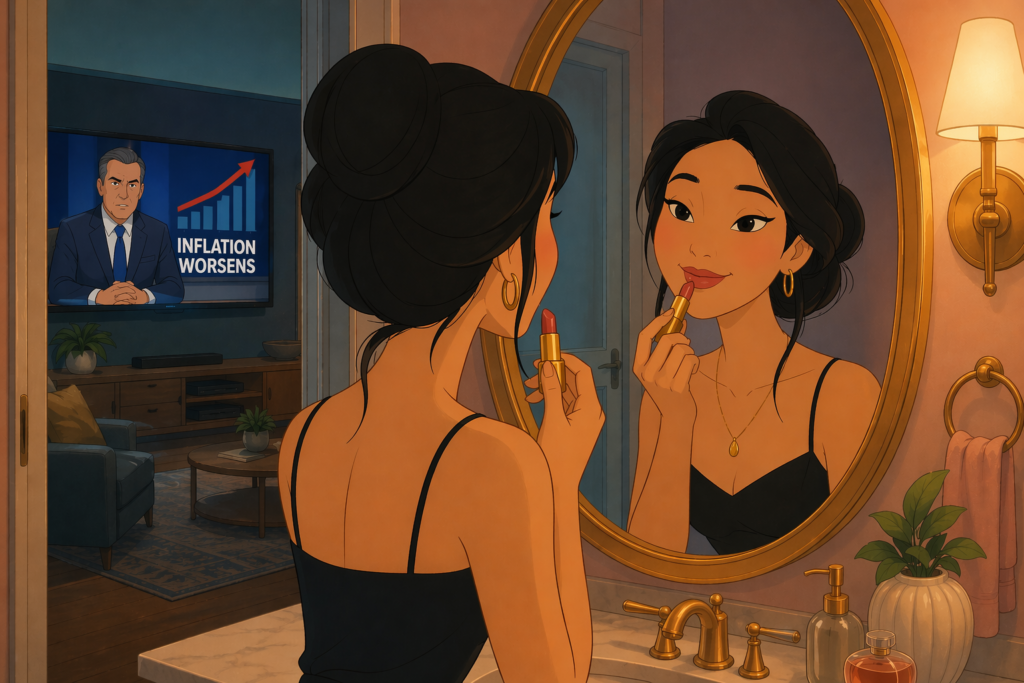
Under cost pressure, spending gets reallocated toward faster emotional returns.
On Wednesday L’Oréal reported 6.7% like-for-like sales growth, beating expectations as demand held strong across the U.S., Europe, and emerging markets.
This is often described as the “lipstick effect” and it’s proving literally true.
Consumers cut back in many areas while continuing to spend (often even spending more) on small indulgences. Like lipstick and other cosmetics.
People aren’t simply spending less right now.
They’re forcing themselves to be more selective about what each dollar delivers.
Beauty products are doing so well because they offer instant gratification.
You use them and see a result right away, whether that’s how you look, how you feel, or how you present yourself to others. Possibly all those things.
That kind of immediacy really matters to buyers.
It reduces the risk of regret and makes the purchase easier to justify, even when budgets are more and more constrained.
Compare that to categories where the payoff is delayed or uncertain, and the difference gets really clear.
Those purchases require patience and confidence at a time when both are in shorter supply.
So spending doesn’t vanish.
It fragments, moving toward smaller, faster, more reliable forms of payoff.
If you’re a product builder or marketer, that puts a different lens on value.
The question, then, is how quickly and clearly the customer feels your product is working.
Where in your product experience could you bring the payoff closer to the moment of purchase? (Or help people SEE how close it can be.)
Want to make your product irresistible? That’s what we do as product marketing consultantsat Graphos Product, helping innovators turn need-driven ideas into market-ready successes.