
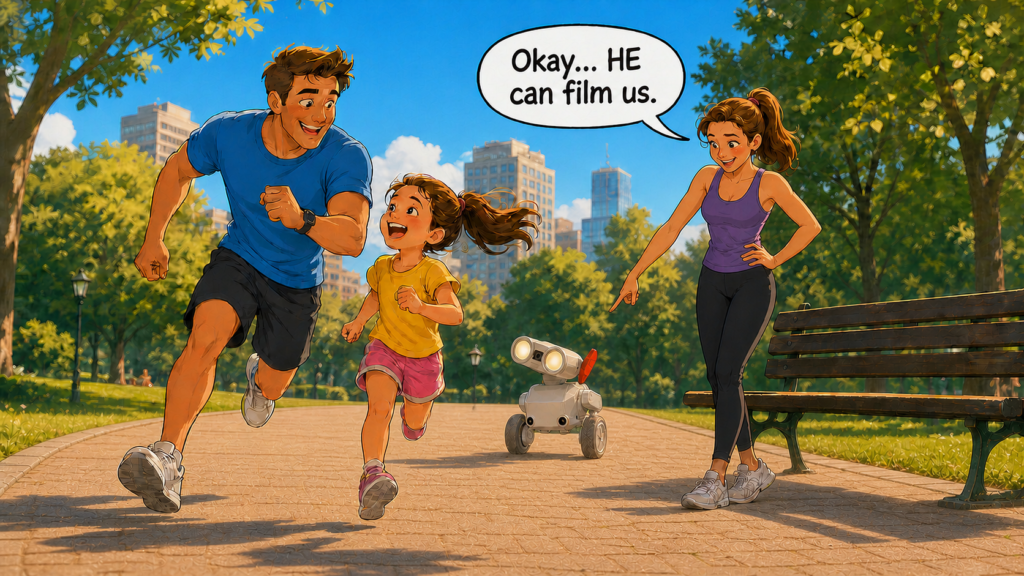
Beni suggests surveillance tech becomes easier to accept when its purpose, personality and boundaries are obvious.
I’ve been writing a lot lately about cameras moving onto our bodies.
Meta puts them in glasses. Apple is about to stick ’em in AirPods. And a big part of the resistance comes from the obvious question:
Am I being recorded right now?
Then I saw Beni. (You have to watch this video.)
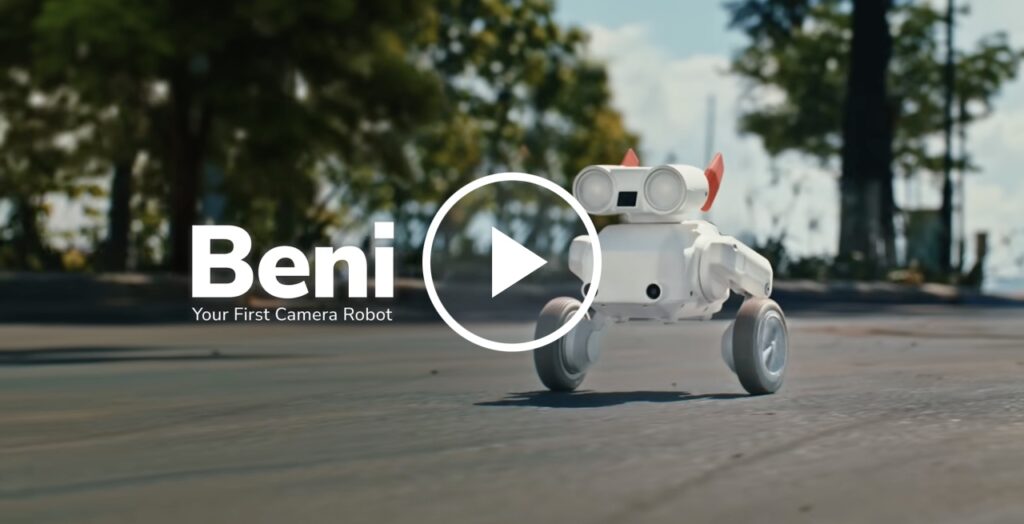
Beni looks like WALL-E’s smaller, sportier cousin. It’s a US $549 four-wheeled camera robot that follows you around, shoots stabilized 4K HDR video, dodges obstacles, jumps over objects up to 10 inches high and picks itself up when it falls over.
It’ll even chase a runner at nearly 18 mph!
In other words, this thing is absolutely a mobile surveillance camera.
And I kinda want one.
That harsh contradiction is what interests me.
Beni has colour-changing eyes. It nods and shakes its head. You can give it different hats and ears.
It’s deliberately designed as a little character rather than a camera with wheels.
But cuteness isn’t the whole story.
Beni’s purpose is obvious.
When somebody points Meta glasses at you, you may not know whether they’re filming. When somebody nearby is holding up a smartphone, you may wonder whether you’re accidentally in the shot.
When a knee-high robot is chasing your kid across a soccer field, everyone gets what’s going on.
It’s the cameraman.
And unlike a human cameraman, it isn’t staring at you, judging you, uploading clips to TikTok or pretending it wasn’t recording.
That may turn out to be surprisingly important as cameras become more autonomous.
Beni offers tail, side, front and circular tracking modes and uses a wearable tracker to stay locked onto its subject. Most of the processing happens on the device, and footage is all stored locally.
The optional AI editing feature is the only function that sends material to the cloud, and that requires permission.
That combination makes the technology unusually legible.
You can see the camera.
You can also tell what it’s up to.
AND you know who it belongs to, as well as why it’s there.
Contrast that with much of today’s wearable camera tech, where designers are working hard to make the camera disappear or be slyly fashionable.
But maybe hiding surveillance tech or trying to make it chic isn’t the best path to adoption.
What if you make the camera more obvious, then make the object carrying it approachable enough that people are comfortable around it?
One of the ideas I explore in I Need That is that adoption depends on more than what a product can technically accomplish. Products come into our social environments, and the reactions of everybody surrounding the buyer become part of the product experience.
Beni solves a legit problem too.
Parents rarely get to show up in their own family videos (especially dads, I find).
Solo athletes can’t film themselves very well. And creators spend ridiculous amounts of time positioning tripods, flying drones or pestering somebody else to operate the camera.
Beni lets you live the moment while something else cheerily documents it.
That’s an opportunity rather than merely another surveillance threat.
And here’s my bet:
Put a stranger behind a camera and people get all self-conscious.
But put an adorable little robot behind one and a surprising number may start performing for it.
The technology is nearly identical.
The social relationship, not so much.
If you’d like help creating and marketing products people feel compelled to buy, the product marketing consultants at Graphos Product can help.