
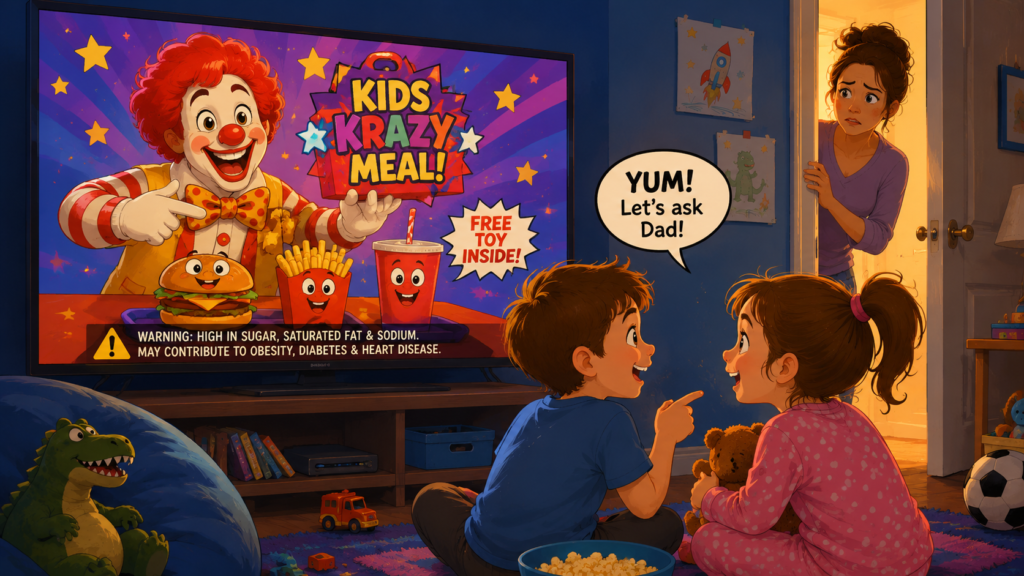
Children can become lifelong customers before they’re old enough to understand they’re being persuaded.
A new U.S. bill is reigniting an old marketing debate.
The proposed Childhood Diabetes Reduction Act of 2026 would prohibit junk food companies from advertising to children under 13 using tactics that clearly appeal to kids, including cartoon characters, fantasy themes, influencers, games, apps and free toys.
It would also require warning labels on junk food.
Advertising groups are pushing back, arguing the bill threatens free speech and relies on vague definitions.
They point out that cartoons, humour and influencers aren’t used exclusively to target children, and that a rule covering media where children make up 30% of the audience could sweep in a big chunk of mainstream advertising.
Whether the bill survives is almost secondary. It forces marketers to confront a harder question.
At what point does persuasion become exploitation?
I wrote about marketing to children in I Need That because kids are wired differently.
A child’s neocortex is still developing. Critical thinking, impulse control and the ability to recognize persuasive intent continue maturing into early adulthood.
That makes children unusually responsive to cues that experienced marketers understand VERY well.
Few industries understand this better than snack food and quick-service restaurants.
Winning a customer at age eight can create habits that last for decades.
Mascots, collectible toys, bright packaging, games and influencers are never accidental. They’re investments in future loyalty.
The business case is obvious, and is talked about in boardrooms.
The ethical case is much harder.
As product marketers, we often celebrate creativity because it helps products stand out.
This debate reminds us that the audience matters as much as the idea.
The same techniques that delight adults can have a very different effect when directed at children who haven’t yet developed the cognitive tools to evaluate them.
Good marketing creates distinction and justifies preference.
Responsible marketing also recognizes when the customer isn’t yet equipped to understand all the consequences.
If you’d like help creating and marketing products the right people feel compelled to buy, the product marketing experts at Graphos Product can help.