
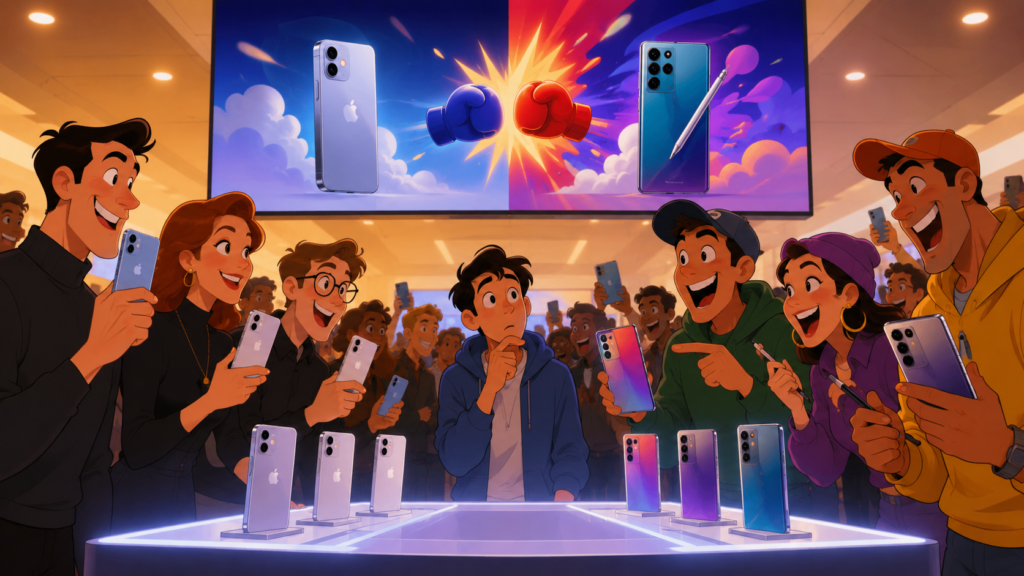
The strongest brand rivalries turn products into exciting cultural stories.
A fascinating new marketing study proves something many of us see instinctively: consumers pay far more attention when brands publicly challenge their rivals.
Not just competitors …
Bitter rivals.
The researchers analyzed more than 1.5 million social media posts and found that messages directed at rivals generated significantly more engagement than posts aimed at ordinary competitors or posts that ignored competitors altogether.
That makes sense because rivalries come with so much emotional history built in.
The audience already feels the tension.
Think Coke and Pepsi.
or McDonald’s and Burger King.
Even Apple and Samsung.
The story is underway long before the ad even begins.
Burger King’s clown jokes resonated because people understood in a heartbeat who was being mocked.
The Pepsi Challenge ads of my childhood succeeded because consumers already viewed Coke and Pepsi as embattled camps.
Apple’s “Get a Mac” campaign blew up because it turned the rivalry itself into genuinely hilarious entertainment. You watched those commercials for relatable, good fun.
Electronics companies have pulled this off especially well.
Samsung spent years poking fun at Apple customers for waiting in launch-day lines, removing headphone jacks, and obsessing over incremental upgrades.
Apple hit back more subtly, usually framing itself as simpler, cooler, or more refined without needing to mention competitors directly.
The rivalry itself carried much of the message.
That’s super-interesting from a product perspective.
A camera spec comparison is snoozingly forgettable. Embarrassing your rival’s camera, though, is enjoyment folks want to share.
How often do consumers pass around isolated feature lists? (I don’t know how nerdy your friends are, but hopefully not too often.)
But they DO share conflict.
In I Need That, I write about products becoming socially meaningful beyond their practical role. Rivalries accelerate that process because they encourage customers to identify with a side, a worldview, and a tribe.
People begin defending products almost like sports teams.
Once THAT happens, loyalty becomes emotional rather than rational, which is far more fun and much harder for competitors to disrupt.
Yeah, rivalry can also get dangerous. Companies sometimes focus so heavily on beating the rival that they stop paying attention to the customer.
But when handled carefully, rivalry can make an entire category more culturally alive, and up everyone’s game. (Also like in sports.)
What rival in your category already owns prime space in your customer’s imagination?
How could you poke at it in a fun, productive way?
Want to make your product irresistible? That’s what we do as product marketing consultants at Graphos Product, helping innovators turn need-driven ideas into market-ready successes.