
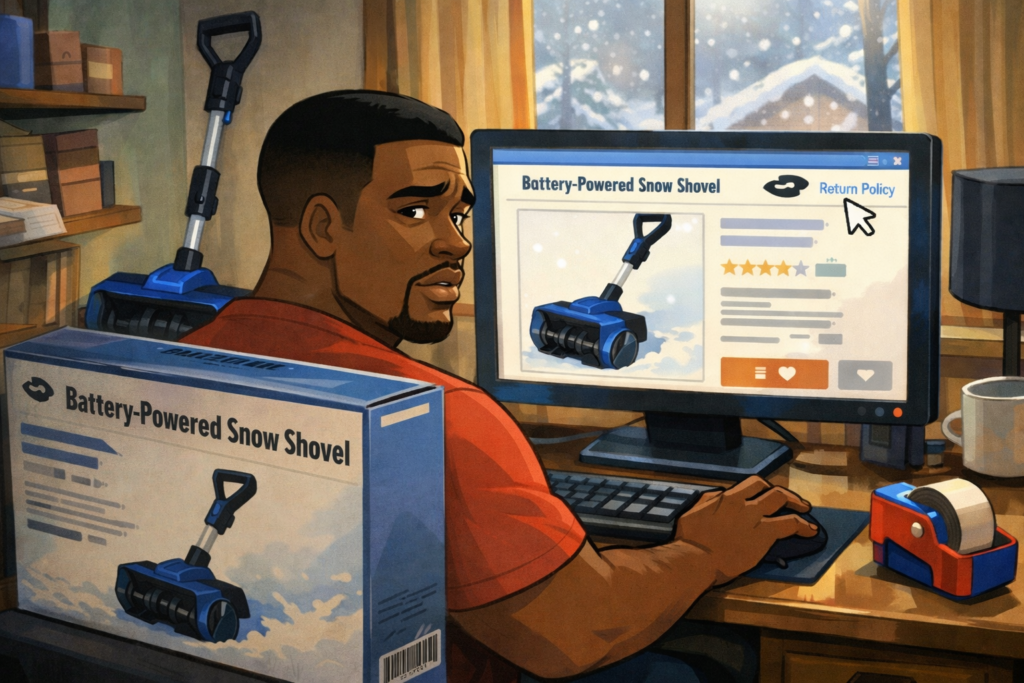
Too many returns can mean buyers aren’t getting the information they need.
I worry about returns because they cost my clients real money.
In shipping and restocking, plus waste, write-offs, and margin erosion that never shows up in the ad dashboard.
And yet platforms like Shopify and Amazon promote easy returns as if we seriously want everyone to use them.
Retail returns in the U.S. will surpass $850,000,000,000 in 2026. (I wrote the number out because “$850 billion” doesn’t do it justice!)
Almost one in five online purchases comes back.
Nearly half of shoppers even admit bending return rules feels acceptable.
That is not only an entitlement problem.
It’s a risk management one.
Returns are a behavioral signal. They show where buyers felt unsure before buying and took the leap anyway, counting on the escape hatch.
When returns spike, it is rarely because buyers are malicious. It is usually because the product story failed to remove appropriate fear at the moment of decision.
This is why I don’t see returns as a back-end problem. They are front-end intelligence.
Early return patterns can tell you which SKUs confuse buyers, which specs feel risky, which promises feel overstated, and where clarity could have converted hesitation into confidence.
The goal here is NOT to reduce returns by piling on friction.
It is to achieve fewer returns because buyers knew exactly what they were getting.
Design and clear messaging that remove uncertainty upstream beat generous policies by a country mile.
Want to make your product irresistible? That’s what we do as product marketing consultants at Graphos Product, helping innovators turn need-driven ideas into market-ready successes.