
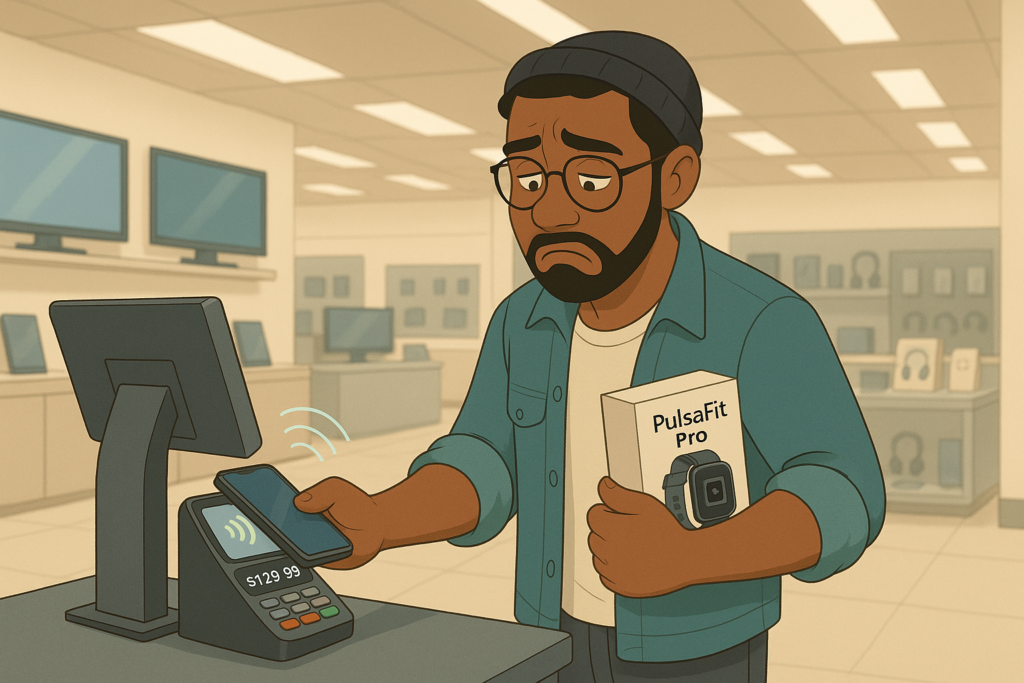
Digital payments change buyer psychology long before logic shows up at the party.
I’ve been a fan of wireless payments via Apple Watch for nearly a decade.
I still love how quick it is and many people don’t realize it’s much more secure than using a card, because a one-time token is swapped rather than disclosing my card number.
But there is a subtle shift going on every time a buyer like me taps instead of hands over cash.
Recent research calls it Spendception, a psychological effect where frictionless digital payments make spending feel less real, lowering internal resistance before rational evaluation even begins.
The money is digital, except the pain is still real.
This matters because payment experience is no longer a neutral utility.
It’s now part of the product.
When buying feels super easy and is invisible, people spend more willingly, yet they also anchor less strongly to the value of what they bought.
I notice this in myself.
One tap feels pretty harmless.
The regret (if it arrives) shows up later.
And when regret shows up late, loyalty can take a hit.
For product makers, this creates a tension worth paying attention to.
Reducing payment friction can increase conversions in the short term.
But if the buying moment lacks weight, meaning, or commitment, you may be creating phantom satisfaction rather than durable attachment.
Great products help buyers feel exhilarated about the purchase itself, not just better while spending.
The strategic question is straightforward:
Does your checkout reduce pain in a way that reinforces confidence, or does it numb the decision so much that buyers disconnect from the value afterward.
Ease closes sales. Meaning builds loyalty.
Want to make your product irresistible? That’s what we do as product marketing consultants at Graphos Product, helping innovators turn need-driven ideas into market-ready successes.