
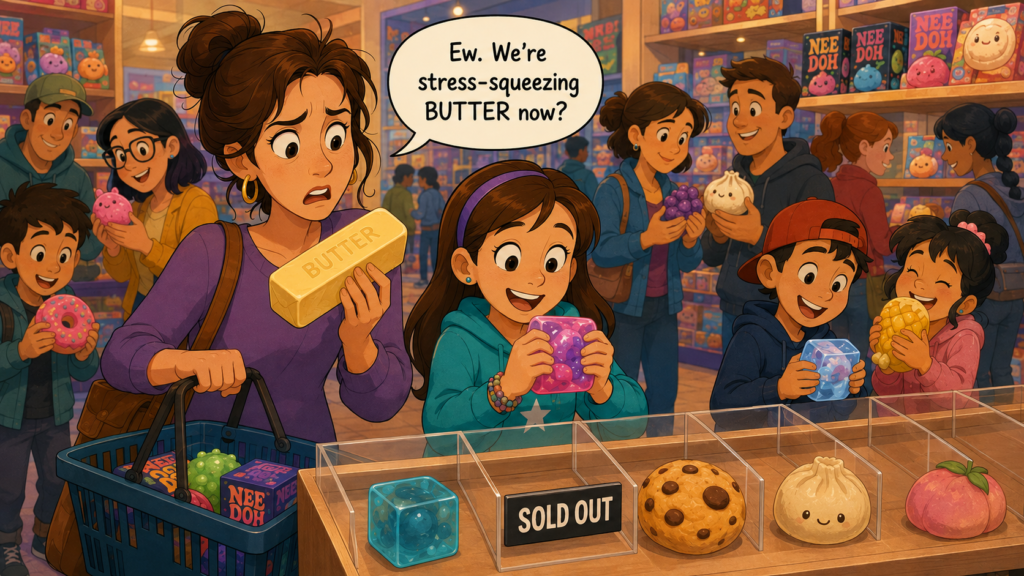
Stress balls are ancient by toy-industry standards. NeeDoh shows what happens when an old need collides with social media, collectibility and a particularly stressed-out culture.
Somewhere along the way, the humble stress ball became cool.
The current star is NeeDoh, a line of brightly coloured squishy toys from Schylling.
NeeDoh itself isn’t even new. It launched in 2017.
Then TikTok got hold of it.
By February, Schylling says it had burned through six months of inventory in six weeks. Sales have more than tripled this year, stores have had lineups for restocks, and $6 toys have reportedly changed hands for $45 or more.
Schylling’s CEO later said inventory intended for the entire year sold out during the first nine weeks of 2026.
For a squishy stress toy.
What’s confusing is that nobody invented much here.
People have been squeezin’ stress balls for generations. Occupational therapists have long used putty and other tactile objects. Then came fidget spinners, Pop-Its and other sensory toys.
Now we’ve apparently arrived at squishy butter.
Seriously.
Search Amazon or TikTok and you’ll find squishies resembling ice cubes, cookies, dumplings, fruit, animals and, yes, sticks o’ butter.
There are probably several things converging here.
Kids like the tactile experience. Parents increasingly recognize that repetitive hand movements can provide a useful sensory activity, particularly for some neurodivergent kids.
Adults squeeze ’em too, and anxiety researchers point to repetitive sensory-motor tasks as potentially calming. The broader scientific evidence for many specific claims around fidget toys are less definitive than the marketing suggests.
And then social media dumps gasoline on it.
Squishing something is weirdly satisfying to watch on video. ASMR, unboxings, rare colours, collecting and restock hunts give creators endless material.
Circana says toys, hobbies and collectibles have become TikTok Shop’s third-largest category, with NeeDoh and similar sensory products helping turn a niche into a substantial growth category.
And these things are cheap enough for an interesting buying dynamic.
A kid can desperately want one (or to start a collection) without Mom or Dad needing a family budget meeting.
That combination is product-development gold: high desire, low purchasing friction.
But there’s another intriguing thing about this category.
Nobody can really own squishy.
NeeDoh managed to build the hottest brand around it, but the fundamental product idea is almost absurdly easy to imitate. Every imaginable shape, colour and texture is already appearing from all kinds of companies.
So Schylling has to own everything surrounding the squish: the brand, names, collectibility, designs, distribution and cultural currency.
The product itself is barely an invention.
The need behind it looks more enduring.
We live with screens everywhere, constant notifications and plenty of stress. Against all that technology, one of America’s hottest toys asks you to do something deeply primitive:
Grab it and squeeze until you feel better.
Maybe the stick of butter isn’t so stupid after all.
If you’d like help creating and marketing products people feel compelled to buy, the product marketing consultants at Graphos Product can help.