

The $499 CameraJet toothbrush is absurdly over-engineered. Dyson’s intense new ad makes that the whole point.
When I first saw Dyson’s new CameraJet, I thought it looked sorta like a power screwdriver.
Then I learned it had a camera.
And my immediate reaction was: Why the heck does anyone want a camera on their toothbrush?
My wife and I have used Philips Sonicare toothbrushes for about 25 years. They do a phenomenal job, so both of our girls have them too. Toothbrushing is one of those product categories where I hadn’t been sitting around waiting for somebody to reinvent it.
Apparently James Dyson was.
Dyson has spent six years developing CameraJet, involving 661 engineers. The result is a US $499 toothbrush containing a 100,000-pixel macro camera, machine learning, Wi-Fi, Bluetooth, a fluid-delivery system and 16 million lines of code.
As a product geek, reading the specifications almost stresses me out.
That camera captures 28 images every second and uses AI trained on 470,000 dental images to identify the gaps between your teeth.
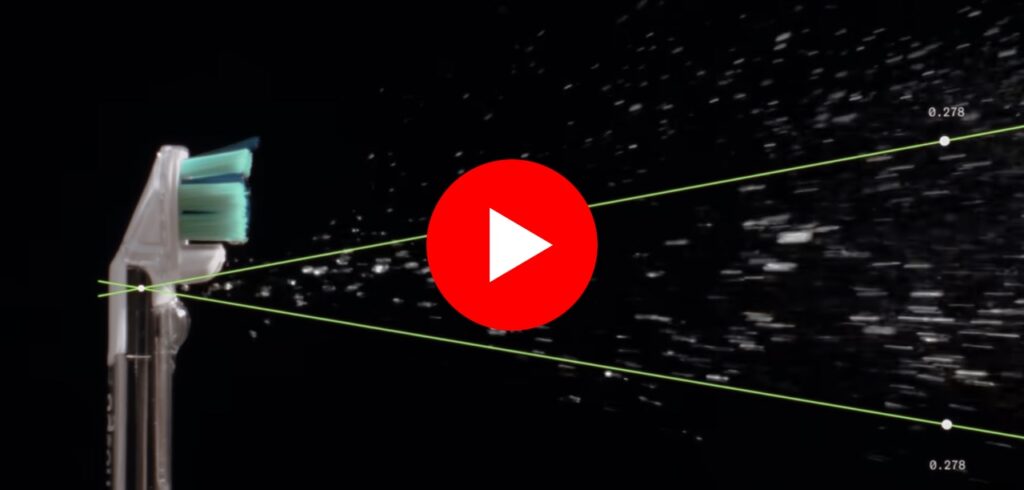
Within 100 milliseconds of spotting one, the brush can fire a precisely targeted conical jet of mouthwash into it while you’re brushing.
Why conical?
‘Cause Dyson engineers decided conventional narrow water-flosser jets weren’t removing plaque optimally enough.
They spent years studying fluid dynamics and even developed their own artificial plaque through a five-year collaboration with the National University of Singapore so they could test different jet designs.
There’s a 12.5 ml mouthwash tank engineered to deliver what Dyson says is the perfect amount for one cleaning session without flooding your mouth.
Naturally, it works upside down.
Dyson developed an “anti-gravity” diaphragm pump and pressure chamber because an ordinary straw-style reservoir can suck air when tilted.
And because toothpaste foam could obscure the camera, Dyson developed its own low-foaming toothpaste too.
At some point you start wondering whether they designed a toothbrush or the oral-care equivalent of a Mars rover.
Which is why I found Dyson’s new advertising for CameraJet so… stressful.
Instead of beautiful people smiling while brushing beautiful teeth, the ad tears the product apart, shows the engineering, the sketches, the X-rays, the fluid jets and the obsessive thinking behind it.
But that’s exactly what a product like this needs.
If Dyson simply showed me a toothbrush with a camera and said it cost 499 beans, my existing Sonicare would be looking pretty terrific.
The ad tackles a harder job:
It has to make all that over-the-top engineering seem necessary.
And once you understand the problem Dyson chose to solve, the craziness becomes more coherent.
James Dyson says the project began with flossing.
People know they’re supposed to do it, yet many don’t. His team focused on the gaps between teeth where plaque gets missed, then worked backwards from the desired result: somehow identify those gaps and clean them during normal brushing.
Will folks buy it?
I expect so.
It certainly isn’t designed or priced for everyone (never mind the special consumables’ own costs), and early dentist reactions have included appropriate caution about treating it as a replacement for conventional flossing before more independent clinical evidence accumulates.
But Dyson has rarely built its business around being the sensible low-cost option.
It takes an everyday object, asks what everyone else has accepted as inevitable, then engineers the hell out of it.
And for a product geek, that’s both fascinating…
and fairly exhausting.
If you’d like help creating and marketing products people feel compelled to buy, the product marketing consultants at Graphos Product can help.