
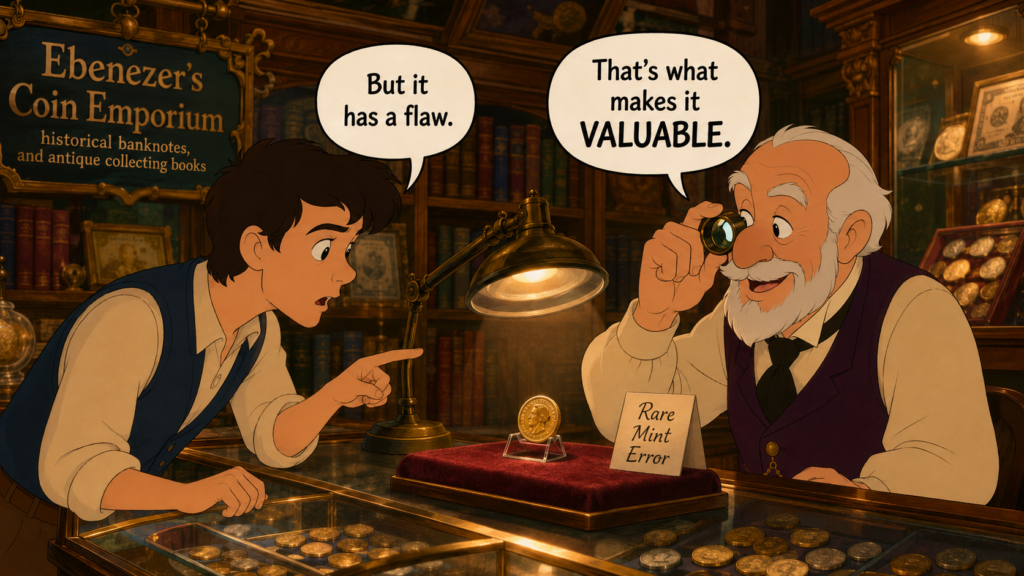
Sometimes a tiny flaw makes a product more desirable than perfection.
If you’re a coin collector, you already know this:
The coins worth the most are often the ones that left the mint with tiny imperfections.
Like a misprint. An off-centre strike. Or a missing detail.
The mistake becomes the whole story.
Fascinatingly, a marketing study found the same effect with consumer products.
People consistently preferred products described as having been created by mistake over otherwise identical products created intentionally.
They were even willing to pay more. The researchers found that mistakes make products seem more improbable, which makes them feel more unique.
Even wilder, the effect wasn’t limited to happy accidents that improved the product.
Participants still preferred artwork, music, and photographs when they learned a visible flaw happened accidentally rather than deliberately. The imperfection got to be part of the product’s identity.
There is, of course, an important limit.
The effect disappeared for products bought primarily for function and reliability.
Folks didn’t value accidental uniqueness in utilitarian products, where performance and safety take priority.
That makes perfect sense. A rare coin is exciting. A rare parachute defect is horrifying.
I wrote in I Need That that buyers rarely purchase products based only on specifications.
We’re drawn in by stories.
Maybe the most compelling story isn’t how everything went according to plan, but that something wonderfully unexpected happened along the way.
If you’d like help creating and marketing products people feel compelled to buy, the product marketing consultants at Graphos Product can help.