

Meta is making virtual reality dramatically lighter and more affordable. The big engineering challenge is making folks around the wearer comfortable.
Meta just showed off the coolest VR hardware it has built to date.
The new Meta VR Glasses, due in spring 2027 for US$1,299, weigh about 100 grams, way less on both counts than a Quest headset.
Most of the computing work has been moved into a pocket-sized puck connected by a wire.
The glasses use eye tracking and hand gestures, provide full-colour passthrough so you can see the world around you, and promise movies, virtual workspaces and gaming in something much closer to a pair of sunglasses than a headset.
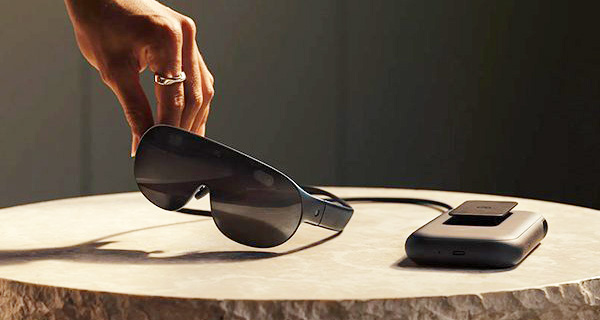
Image: Meta
Technically, super impressive. Not gonna lie, I’d love to try a pair.
But socially, the timing is as awkward as can be.
Meta’s existing smart glasses are smack in the middle of a massive privacy backlash.
More than 70 people have now joined a lawsuit alleging that Meta glasses captured shockingly sensitive images that were exposed to contractors working on AI training.
Meanwhile, viral videos of people secretly filming strangers have helped inspire the charming nicknames “creep glasses” and “pervert glasses.”
Some businesses and institutions have restricted smart glasses, and HTC has begun marketing its competing Vive Eagle glasses explicitly around privacy protections.
To be clear, Meta’s new VR Glasses are a different product from its camera-equipped Ray-Ban smart glasses. Their cameras are primarily there to provide passthrough, tracking and mixed-reality capabilities.
Meta is also responding to the broader concern with new privacy tech, including Private Processing for its AI glasses, designed so certain data can be processed without Meta being able to access it.
But buyers don’t experience these products in a vacuum.
Imagine wearing wired-up dark sunglasses on a beach, train or in an airport. YOU may know exactly what its cameras are doing.
The stranger beside you can only guess.
That makes for a huge product-adoption problem because the person who buys the product isn’t the only person who has to become comfortable with it.
Google discovered this with Glass more than a decade ago. Meta ignored that, and is rediscovering it at much greater scale.
And the surrounding climate has become tougher. In a Pew survey this year, 71% of Americans said increased AI use would make their personal information less secure.
That’s how you know trust is a genuine product feature in wearables.
Weight, battery life, display quality and price can make the buyer want the device.
Visible recording indicators, obvious social cues and credible privacy protections help everyone else tolerate having it around. IF they trust those protections.
The better the technology gets at disappearing into ordinary glasses, the harder that second job is.
One of the ideas I dig into in I Need That is how adoption depends on reducing the stuff that makes buyers hesitate. With a wearable camera or sensor system, those folks include bystanders who will never buy one.
Meta can make a VR headset look like normal glasses.
But can it somehow make wearing them seem normal too?
If you’d like help creating and marketing products people feel compelled to buy, the product marketing consultants at Graphos Product can help.