
A product wins when it feels familiar enough to try and strange enough to remember.
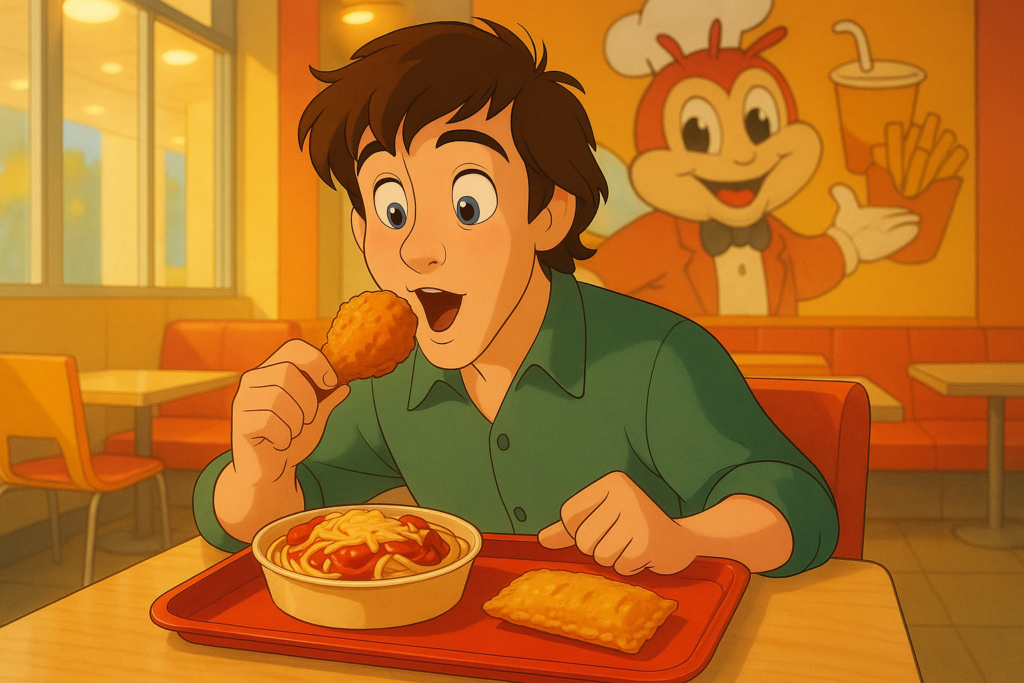
About a year ago, a colleague raved to me about the “delicious weirdness” of Jollibee.
I smiled, filed it away, and moved on. Then I realized my small Canadian city already has four locations.
The entire United States has around eighty.
That is not an accident.
The Atlantic recently captured what makes Jollibee work. On the surface it looks like American fast food.
Bright lights. Big menus.
Fried chicken and burgers.
But the moment you bite in, something is … different.
Garlic. Citrus. Fermentation.
Sweet spaghetti with wiener slices.
Pineapple on burgers. Ube hand pies.
This ain’t American food.
It is Filipino food that grew up next to American food, and learned how to bend it.
And this is the lesson most product makers don’t get.
Differentiation does not come from being radically unfamiliar.
It comes from violating expectations just enough to trigger curiosity and memory.
Classic Raymond Loewy’s MAYA (Most Advanced Yet Acceptable).
The product feels safe to approach AND surprising to experience.
That tension is sticky.
Buyers do not tell others about burgers, chicken or tech products that meet expectations.
Like my colleague, they talk about products that slightly rattle them, then leave them delighted.
Jollibee is not trying to out-American American fast food.
It is making it strange in a way that feels joyful, personal and deeply human.
Weird, when done the best way, is not risky.
It is magnetic.
Want to make your product irresistible? That’s what we do as product marketing consultants at Graphos Product, helping innovators turn need-driven ideas into market-ready successes.