
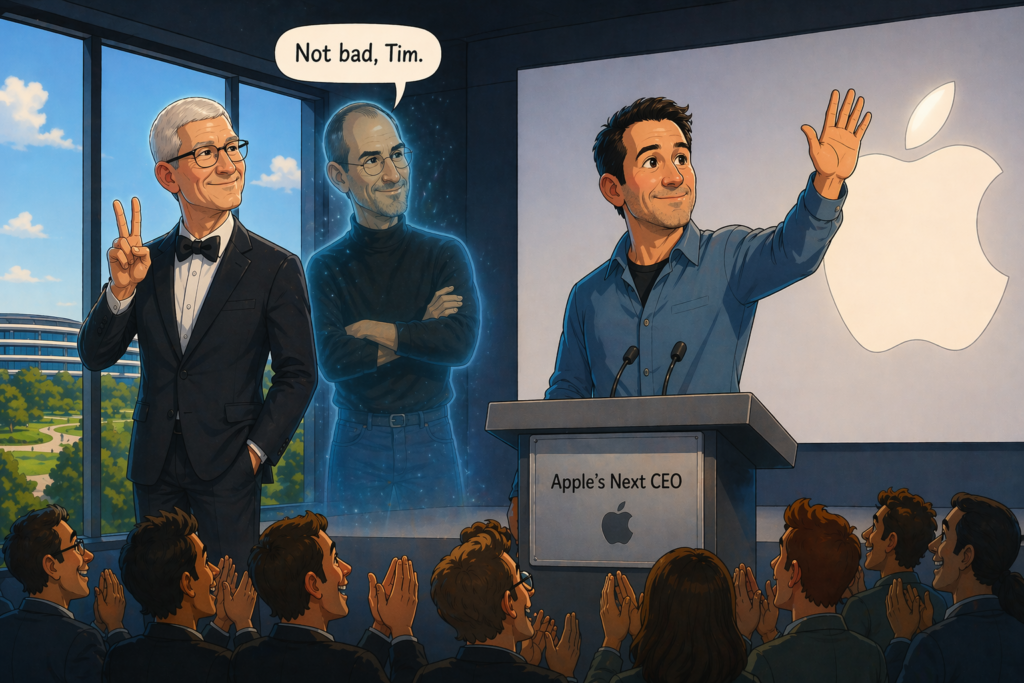
A leadership change can unlock decisions that have been economically or culturally out of reach. Will this one?
Apple has named John Ternus as its next CEO, with Tim Cook stepping aside after 15 years and moving into an executive chairman role.
Cook’s era may not have delivered amazing innovation, but did bring phenomenal scale and consistency.
The company expanded its core products into global platforms and reached valuation milestones that totally reshaped expectations for what a tech business can become.
But that kind of success also creates gravity.
Roadmaps harden up, risk tolerance narrows down, and decisions optimize for continuity, because the cost of disruption multiplies with size.
Shareholders are in it for growth, and not innovation risk.
But a transition at CEO level is one thing that can change that equation.
Ternus steps up with deep, deep product knowledge and long exposure to how decisions get made inside Apple, which positions him to revisit assumptions that have been carrying forward year after year.
Innovation at this stage never begins with a blank slate (the exception being when it was Jobs coming back after his own 11-year NeXT hiatus).
It can come from removing constraints that no longer serve the product or the customer.
Apple has no shortage of ideas or capability. That’s not the barrier.
The opportunity sits in deciding which paths deserve renewed focus and which tradeoffs can be reconsidered.
That kind of shift requires both credibility and permission … and leadership changes can create both at once.
Do you think this is a good change?
Where in YOUR business have past wins shaped decisions that no longer need to hold?
Want to make your product irresistible? That’s what we do as product go-to-market experts at Graphos Product, helping innovators turn need-driven ideas into market-ready successes.