
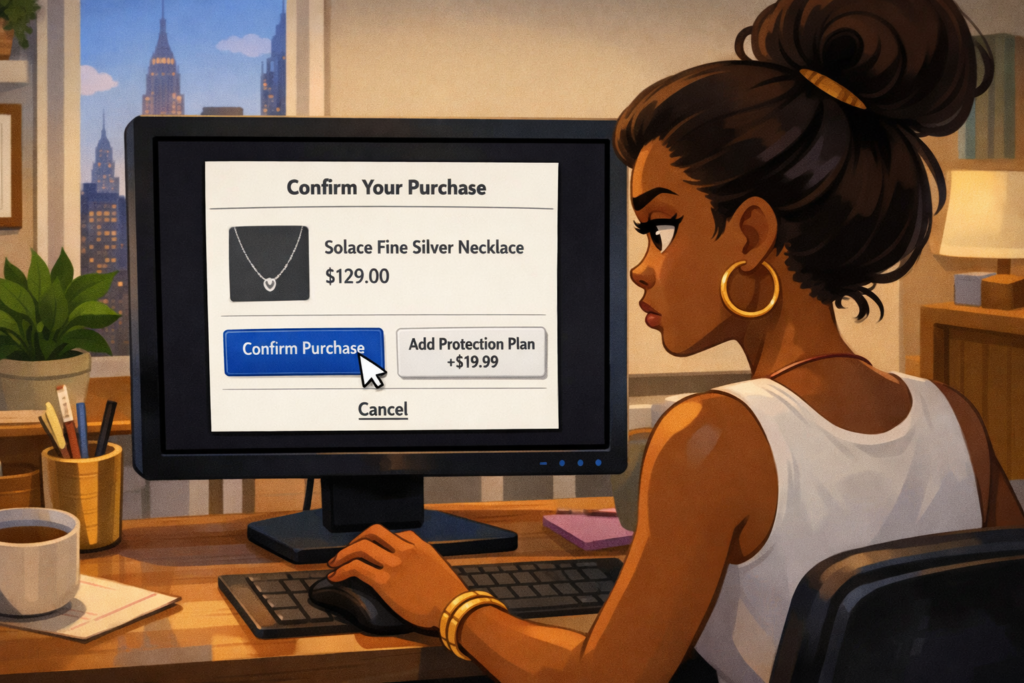
The fastest way to LOSE a yes is to ask one more question.
A 2025 Journal of Consumer Research paper looked at something many teams assume is harmless: the “confirm or change” nudge at checkout.
You know the moment:
You’ve chosen the product.
Good to go.
And then, the system asks if you’d like to confirm … or consider something else.
In one context, this works.
A subscription app nudged users to switch from monthly to annual and saw a meaningful lift.
BUT, in another case, it totally backfired.
A jewelry retailer used the same style of nudge to sell a service-plan add-on. The add-on sold better. BUT the core jewelry sale dropped.
That little upsell step didn’t merely influence choice. It restarted the deliberation process.
And that’s the risk product teams have to watch out for here: a buyer who has said yes is PAST evaluating value.
They are executing intent. Interrupt that flow and the brain switches back into assessment mode.
Whoops. Suddenly, the cart is no longer obvious.
The price is reweighed.
Doubt creeps in.
Abandonment becomes rational.
This is especially dangerous when the nudge sits late in the journey.
In trying to clinch the upsell battle, you might lose the war.
The better question isn’t whether nudges work. It’s whether they are placed before or after commitment has psychologically locked in.
Where might you be successfully optimizing the extra decision … and paying for it with fewer completed orders?
Want to make your product irresistible? That’s what we do as product marketing consultants at Graphos Product, helping innovators turn need-driven ideas into market-ready successes.