

Ring has solved one of security cameras’ obvious limitations. The question is if customers wanted that limitation removed.
A security camera has always had one reassuring characteristic:
It stays where you put it.
Ring has changed all that.
Its new Drone Cam is a US $249.99 indoor camera that flies preset routes through your home, responding to sensors or checking rooms on command.
The companion US $999.99 Rover Cam patrols businesses on wheels. Both use Ring’s AI Pilot navigation system.
Technically, I get it.
One flying camera can look around corners and inspect multiple rooms. The drone records in 2K, flies for up to eight minutes and returns to a dock that covers the camera when it isn’t operating.
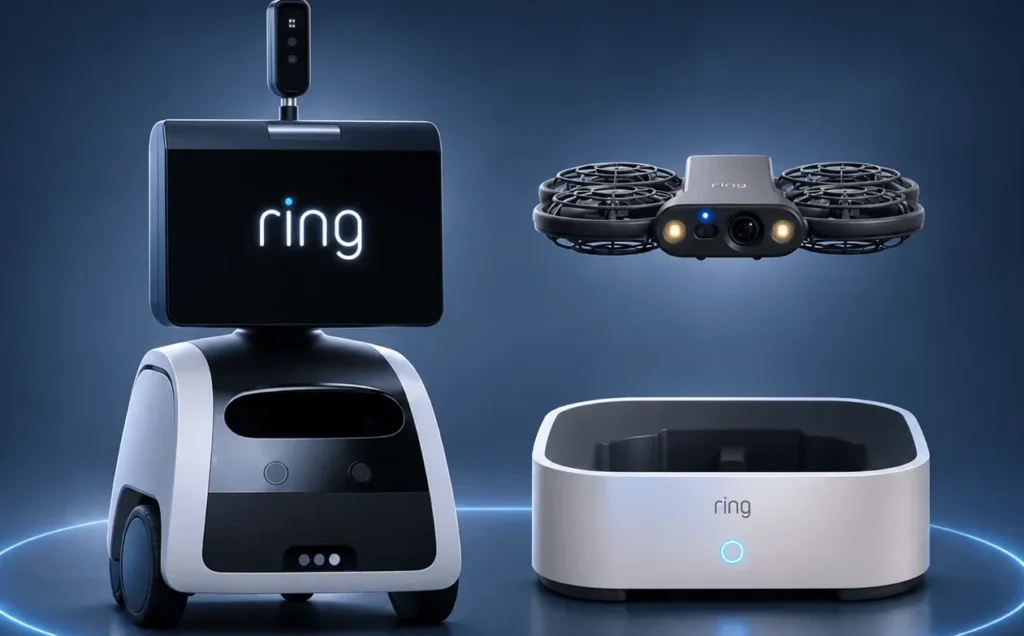
Image: Ring
But timing is interesting.
American communities have been reconsidering networked surveillance this year.
Secure Justice counted about 90 cities and counties ending Flock Safety relationships in August alone, although Flock says new municipal partnerships still substantially outnumber non-renewals.
Ring itself cancelled a planned Flock integration in February. Importantly, Ring says it never even launched, so no customer video was transferred through it.
Public license-plate surveillance and a privately owned home camera drone are obviously different things.
But consumers don’t evaluate products in tidy category boxes.
A fixed camera points at the front door. A drone leaves its dock, flies upstairs and comes a-looking’.
Maybe when some people entitled to be there don’t expect it.
That really alters the feeling of the product.
Important to recognize how removing a technical limitation can expose a psychological one nobody was worried about before.
Yeah, Ring figured out how to make the camera independently mobile.
Now it has to convince people that they want it snooping around their place.
If you’d like help creating and marketing products people feel compelled to buy, the product marketing consultants at Graphos Product can help.