
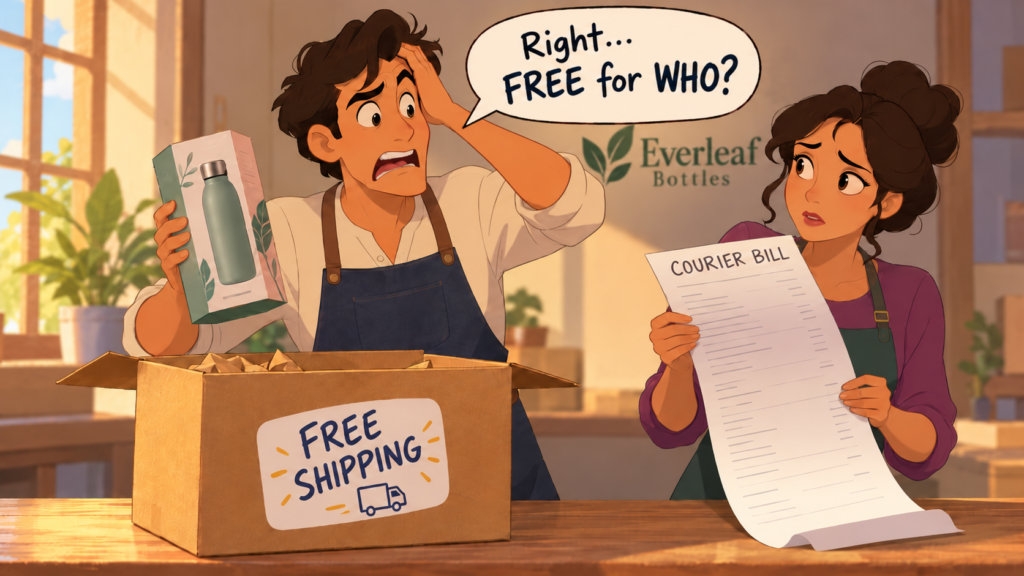
Customers have been trained to see shipping as free. But someone still has to pay for the box, labour, truck and fuel.
Amazon has done a plain remarkable job convincing us that products magically appear at our doors for FREE.
To the point that we get irked if we ever have to pay to ship something we buy… or return.
In Ryder’s 2026 ecommerce study, 62% of shoppers said free shipping influences purchase decisions, and 71% had abandoned carts because of unexpected shipping charges.
Course, shipping has never been free.
Amazon reported $102.7 billion in shipping costs last year.
Its business can absorb those expectations through an economic engine most product brands don’t have: Prime subscriptions, marketplace commissions, fulfillment fees and advertising.
Amazon generated $172 billion from third-party seller services last year and another $68.6 billion from advertising.
FBA sellers PAY fulfillment charges covering picking, packing and shipping.
I remember a Shark Tank story that captures the danger beautifully.
Mark Cuban invested in The Painted Pretzel, which reportedly sold a product for $29.95 with about $15 of margin. Then the company offered free shipping, “to be nice.”
Shipping cost, um, about $16.
Every single order meant more losses.
That math maths uglier from there. You still have customer acquisition, payment fees, support, damaged shipments and returns. NRF estimated that 19.3% of online sales were returned in 2025.
This is one of the commercialization realities I come back to in I Need That: creating something people desperately want only gets you partway there.
Founders understandably obsess over sales volume. It’s what you naturally think of first.
But revenue is a deadly vanity metric when every incremental order burrows you further and further into the red.
Offering free shipping DOES increase conversion. Minimum thresholds can increase basket size. And building some freight into price can work too.
The important number is what remains after many customers get the product, decide to keep it (or not), and after every cost required to make all that happen has been paid.
Because the very hardest kind of growth is the type you can’t afford.
If you’d like help creating and marketing products people feel compelled to buy, the product marketing consultants at Graphos Product can help.