
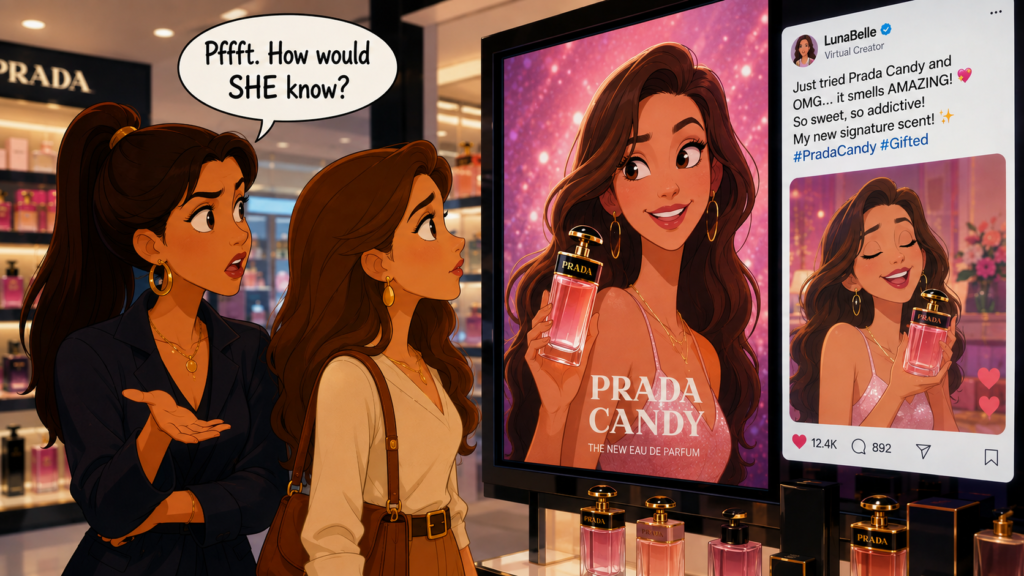
New research suggests AI influencers become MORE persuasive when they stop pretending to be real people.
AI influencers are popping up everywhere, from Instagram to TikTok, and brands are investing heavily in digital personalities that never age, never sleep, and never negotiate endorsement fees.
Conventional wisdom says social media must be where they belong.
New research suggests otherwise.
The researchers found that virtual influencers were generally more effective in traditional display advertising than in social media posts.
The reason is surprisingly simple:
In a display ad, people naturally assume they’re seeing crafted marketing.
But in a social post, they expect something closer to a personal recommendation.
That difference changes how we judge credibility.
When a virtual influencer says a perfume smells amazing, a moisturizer feels luxurious, or a new coffee tastes incredible, our brains instinctively ask, How the F would IT know?
The perceived authenticity starts to crack.
One of the ideas I explore in I Need That is how every buying decision begins with trust.
Long before customers evaluate features, pricing or performance, they decide whether they believe the source. That principle applies every bit as much to AI as it does to human salespeople.
Ironically, AI doesn’t become more believable by acting more human.
It happens by being honest about what it even IS.
An AI influencer can explain ingredients, compare features, summarize customer reviews and answer questions around the clock.
It doesn’t need to invent memories, preferences or sensory experiences to get persuasive.
As brands race to humanize AI, transparency could become its biggest competitive edge.
If you’d like help creating and marketing products people feel compelled to buy, the product marketing consultants at Graphos Product can help.