
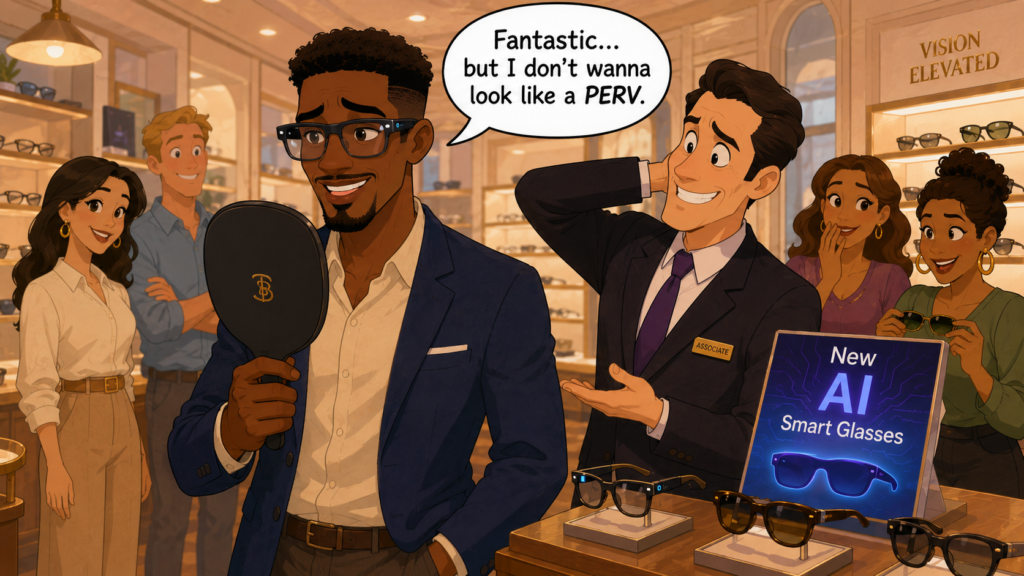
The hardest engineering challenge is earning the trust of everyone NOT wearing them.
A few weeks ago, I wrote that the biggest barrier facing smart glasses isn’t battery life, display quality, or AI.
The show-stopper is social acceptance.
People don’t want to be seen as that person.
The latest backlash against Meta‘s Ray-Ban smart glasses suggests that concern is hitting the fan.
The Internet has started calling them “pervert glasses.”
It’s a nickname that’s already stuck.
Activists have even altered Meta advertisements to highlight privacy concerns in their own “Always Watching” billboard campaigns.
And Instagram is now banning videos recorded with the glasses if they harass or exploit unsuspecting victims.
(It tells you a lot that that’s actually a thing.)
Meta has also introduced new safeguards, including disabling cameras if the recording indicator light has been tampered with and removing listings that help people defeat those protections.
That reinforces something important that I’ve talked about:
This is a serious trust problem, not a tech one.
I find it especially interesting that Apple is reportedly delaying its own smart glasses while developing additional privacy protections.
If those reports are accurate, Apple seems to believe that privacy could become its biggest competitive advantage in the category.
In case you haven’t noticed, Apple has been heavily playing up its own privacy standards in recent campaigns.
Hilariously, DuckDuckGo just launched its own $39 “Normal F***ing Sunglasses.”
Meta, meanwhile, faces a climb steeper than El Capitan.
The company has spent years trying to convince consumers that its AI glasses are helpful everyday tools.
Yet its history with personal data means many people start out from a position of skepticism rather than trust. Fairly or unfairly, reputation seriously shapes how new products get received.
I wrote in I Need That that people adopt products when the perceived rewards outweigh the perceived risks.
With smart glasses, there are two people to convince.
The person buying the glasses.
AND everyone else in the room.
Until both groups feel comfortable, this category will remain a tougher sell than its impressive technology might deserve.
If you’d like help creating and marketing products people feel compelled to buy, the product marketing consultants at Graphos Product can help.