
Great positioning captures the change in a customer’s life, not the sophistication of the technology.
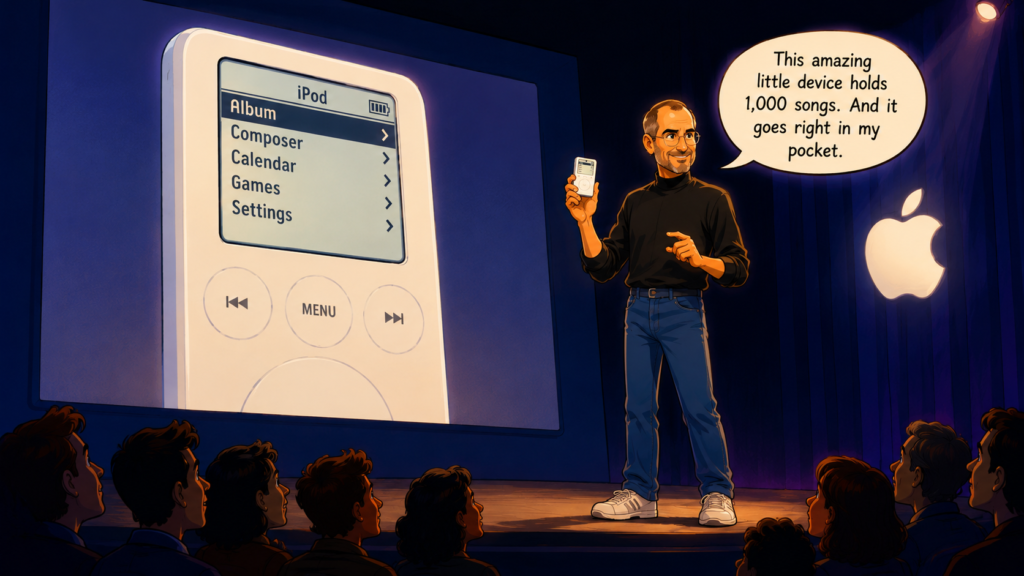
One of the most admired product positioning lines ever written came from Steve Jobs during the launch of the iPod back in 2001:
“1,000 songs in your pocket.”
At the time, the MP3 player category was drowning in technical lingo.
Brands competed on storage size, transfer speeds, supported file formats, and battery specs, basically assuming customers would make decisions by comparing features.
Apple came at the problem differently.
The company translated all of that tech jargon into a new human experience that people could instantly picture in their minds.
Your entire music collection could suddenly travel with you.
That changed what sucked about commuting. It transformed long flights, walks to school, afternoons at the gym, and every idle moment in between. The iPod was positioned as something other than a music player or storage device: it gave you freedom from limitations.
That really matters because customers rarely buy technology for its internal mechanics, despite that product makers see their offerings that way.
They buy the expanded version of life that the product delivers.
The most useful positioning exercise I know is to ask:
“What becomes possible now?”
Or more specifically:
“Wow, now I can…”
That answer usually reveals the real product.
A cordless vacuum means you’ll clean more often because it’s way faster and easier.
A meal kit changes how stressful planning, shopping and measuring can get.
And noise-cancelling headphones create your own private oasis in chaotic environments, so you get more peace and enjoyment.
The feature matters because of the experience it unlocks around it.
Strong positioning kicks butt at that level.
So, what is the “Wow, now I can…” moment your customer experiences with your product?
Want to make your product irresistible? That’s what we do as product go-to-market expertsat Graphos Product, helping innovators turn need-driven ideas into market-ready successes.