
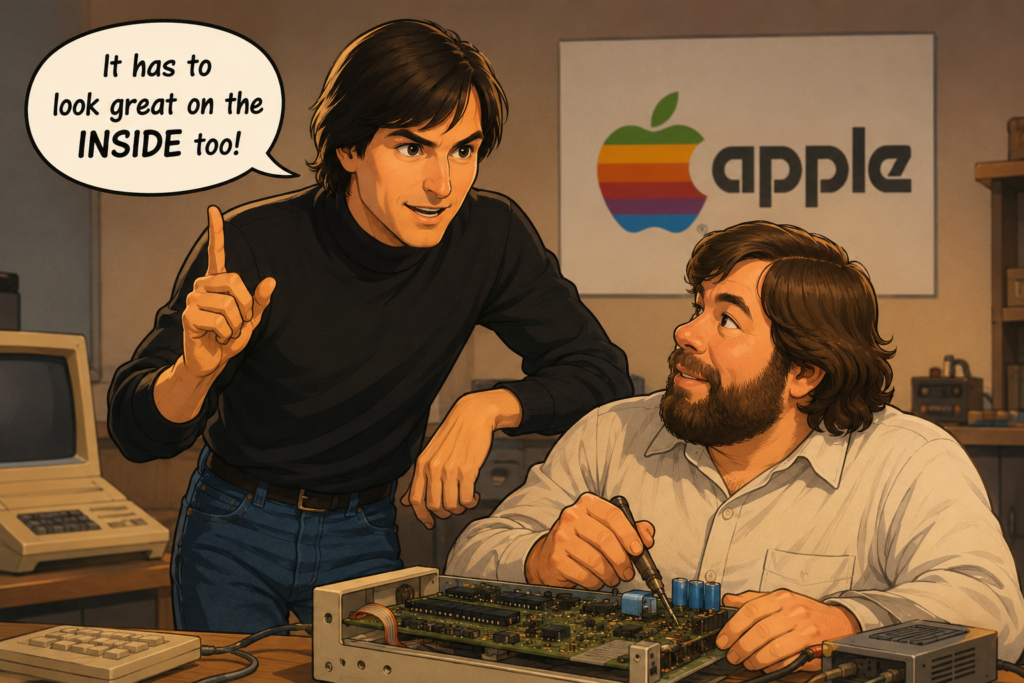
What’s inside may count, but what buyers value depends more on what their peers see.
Why will someone happily drop $12K upgrading wheels, trim, and paint on a brand new truck, then hesitate over a premium mattress they’ll sleep on every night for the next decade?
Well, because visibility changes buyer psychology.
And, of course, it’s slightly complicated.
Products like cars, watches, clothes, and phones get used in public view.
These things telegraph taste, status, identity, and tribe to the folks around us. Sure, buyers think about performance, but we also care deeply about what ownership communicates to our peers.
Invisible products work differently.
Mattresses disappear under sheets. HVAC systems hide in the basement. Insurance stays on the low-down until something goes wrong.
These products sell much less through admiration and mostly through trust, comfort, confidence, and peace of mind.
I’ve worked on lots of products like this.
BzzzzKill gets embedded inside Stratocasters and Telecasters, so once installed, you hardly never see it again. That’s partly why we created branded T-shirts and amp stickers: to give customers a visible way to express pride in something hidden.
Parallel Pillow works similarly. Once it’s inside a pillowcase, the product totally vanishes. The sale depends almost entirely on the promise of better sleep and a more powerful tomorrow, no matter how amazing the product looks.
In I Need That, I talk about products becoming compelling when they connect to emotional needs beyond function. Visibility plays a huge role because it changes which emotions matter most.
The marketing for a product people show off should feel very different from the marketing for one they subtly rely on. It’s a harder, different task.
Want to make your product irresistible? That’s what we do as product marketing consultants at Graphos Product, helping innovators turn need-driven ideas into market-ready successes.