

The strongest products create behaviors people fondly remember decades later.
I have vivid memories of slapping the side of a glass Heinz ketchup bottle at the dinner table.
Cool kids knew the move. Tilt the bottle. Tap near the “57.” And wait for the saucy slow-mo avalanche.
Losers slapped the bottom and had it splurt out, overshooting their plate half the time.
(I still wish I’d learned “the move” earlier in life.)
Towards the end of a bottle, my mom had her own trick. She’d pour in a little water, put the cap back on, shake the bottle hard, and stretch the last bit across another meal or two.
Looking back, it sounds pretty silly. People were literally engineering workarounds just to keep using every last bit of their ketchup.
That’s the thing.
Most products spend millions trying to remove friction. Heinz inadvertently turned what didn’t come easy into ritual.
The super-thick ketchup with a stubborn pour. The reassuring heft of that glass bottle in your hand.
These sure weren’t optimized UX decisions, but were part of the emotional experience of the product.
Now Heinz is bringing the same glass bottle back for its 157th anniversary, even though the plastic squeeze version is objectively easier and functionally superior.
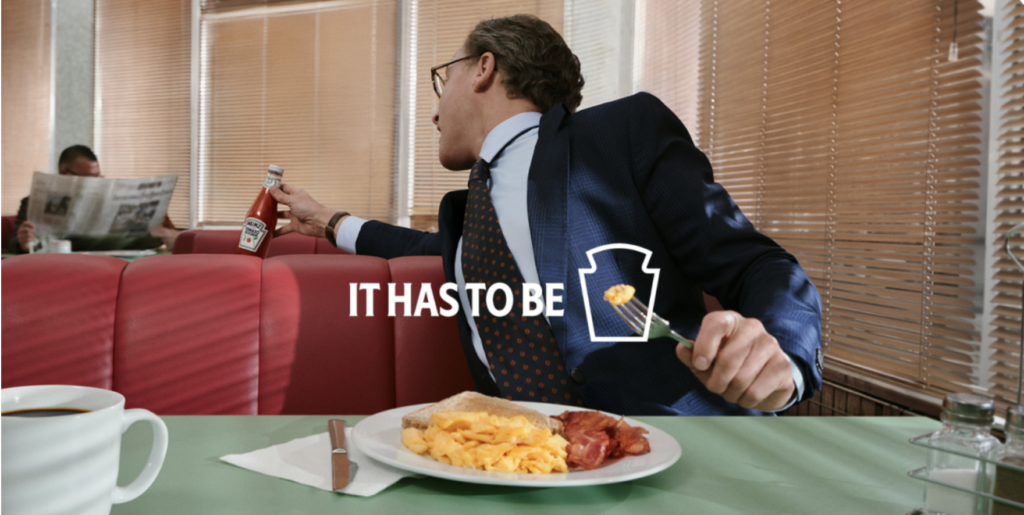
Photo: Kraft Heinz
The company recognizes something many brands look right past: convenience alone rarely creates human attachment.
We humans remember our rituals fo-evah.
We recall sounds, motions, little annoyances, family habits, and workarounds. Those details become memory anchors to a brand that survive long after trends become obsolete.
That’s one reason truly iconic products are so hard to replace. Customers aren’t after utility in this case, but are shelling out to relive a small, familiar, and somehow meaningful experience.
What product sticks in your mind from decades ago?
Want to make your product irresistible? That’s what we do as product marketing consultants at Graphos Product, helping innovators turn need-driven ideas into market-ready successes.