
What if removing part of a product makes it more attractive?
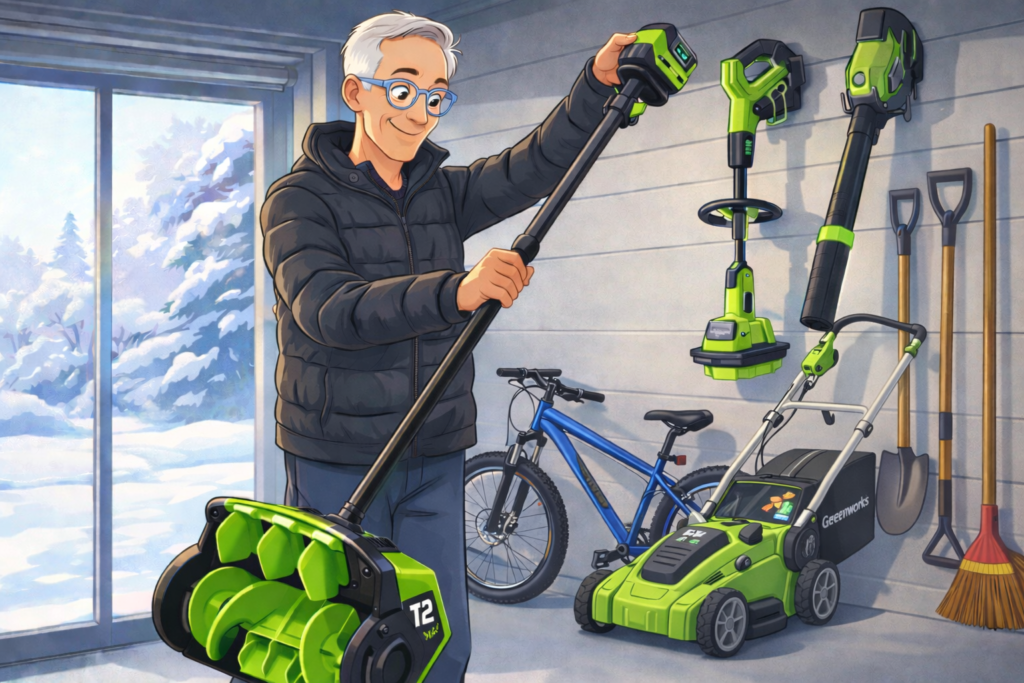
I bought a power shovel recently.
The kind that runs on a removable battery system shared across several yard tools.
When I looked at the options, there were two versions.
One came with a battery and charger.
The other didn’t.
I chose the one without.
The battery for the system that runs our lawnmower costs more than $300.
The power shovel itself costs about the same.
And I will never run the lawnmower and the shovel at the same time. (The weather here can be wild, but not that wild.)
Buying a second battery would have been pointless.
So the “incomplete” version made perfect sense.
This reminded me of a concept from Crossing the Chasm by Geoffrey Moore.
Moore argues that a complete product is essential for mainstream adoption.
Customers want everything needed to succeed with the product included.
In many markets, sure. But modern tool ecosystems can flip the idea on its head.
Once you own the platform battery, every new tool becomes cheaper.
The missing component becomes the value.
The company is effectively selling the core tool only, because the rest of the system already exists in your garage.
In other words, the “complete product” already lives with the customer.
So the next use case only needs a partial version.
Good product strategy often depends on understanding what the buyer already has.
And what they definitely don’t want to buy twice.
What part of your product suite might customers appreciate not having to purchase again?
Want to make your product irresistible? That’s what we do as agency for marketing physical products at Graphos Product, helping innovators turn need-driven ideas into market-ready successes.