
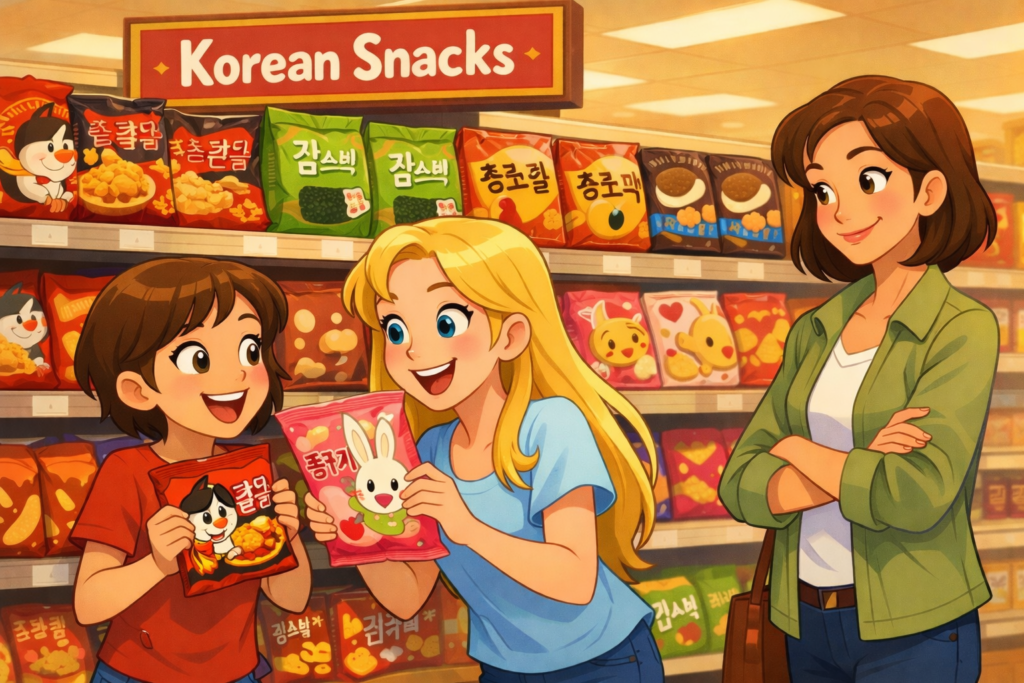
Korean culture has moved from screens and stages into grocery aisles, turning snacks into cultural artifacts rather than just food.
I’ve been noticing something new in grocery stores.
An entire section of Korean snacks. Bright packaging. Unfamiliar (to me) flavors. Some directly tied to the wildly popular “K-Pop Demon Hunters” movie. Others just new to the aisle.
My kids are totally fascinated. Not just with the snacks, but with all things Korean.
This is not randomness.
South Korea has spent two decades exporting culture with discipline.
BTS became a global force. Squid Game became one of Netflix’s biggest hits ever. And beauty brands like Laneige have made “K-beauty” into a mainstream retail category in North America.
Of course, electronics giants like Samsung and automakers Hyundai and Kia helped normalize Korean industrial credibility way before the snack boom. We like South Korea, and welcome their innovative, affordable stuff.
What we’re seeing now is cultural spillover into CPG, and the hands of our youngest generation.
When media and music build global fascination, physical products ride the wake.
Snacks become entry points. Packaging, cultural signaling. And retail shelves become low-risk portals into another world.
I believe this is a great lesson in narrative leverage.
South Korea didn’t successfully export “weird”snacks to us right out the gates. They started with story, sound, and aesthetic. The food followed once our curiosity was primed.
For product makers and marketers, the inspiration is strategic.
Are you building something that can travel alone, or perhaps tying your product to a larger cultural current that can carry it further than distribution and conventional marketing ever could?
Global trends rarely start out in the grocery aisle.
They begin in our imagination.
Want to make your product irresistible? That’s what we do as product marketing consultants at Graphos Product, helping innovators turn need-driven ideas into market-ready successes.