
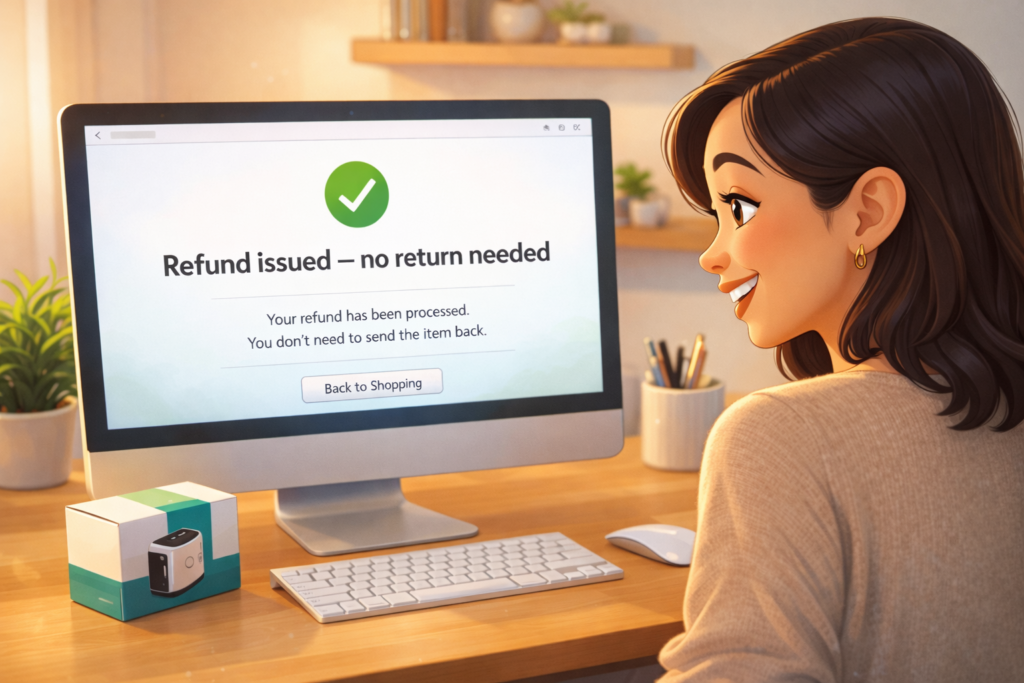
New research says the fastest way to earn trust after a mistake is to ask for less, not more.
Returns are usually treated as damage control.
Something went wrong.
So fix it.
And move on.
But a new series of experiments suggests returns are capable of far more psychological work than most brands realize.
Researchers found that when brands issued refunds without asking for the product back, customer sentiment improved across the board.
Brand opinions rose by 19.3.
Reviews improved by 30.1%.
Perceived “brand warmth” increased by 16%.
Even defective or incorrect items produced stronger goodwill when customers were told to keep them.
The effect was all about relationship signaling.
People evaluate brands the same way they evaluate other people.
When a brand removes effort, suspicion, and proof-seeking from the process, it feels warm. Caring.
Way more human.
And that feeling carries forward into future buying decisions.
Of course, this isn’t a blanket recommendation.
I’m nervous about the same things you are. A few days ago I wrote about how 1 in 5 products now get returned.
Returnless returns work best for low-to-moderate priced items where uncertainty (not fraud) is the dominant barrier.
Anti-abuse systems still matter. Some customers exist to test boundaries.
How to scam you might show up on social channels and in forums.
And so might how amazing your company is.
The research shows something important: the long-term value of trust and advocacy probably outweighs the short-term recovery of a returned product.
Returns aren’t simply a cost center. They can be a really good brand investment.
A moment where buyers decide whether this relationship is worth continuing.
And that decision is proven to compound.
Want to make your product irresistible? That’s what we do as product marketing consultants at Graphos Product, helping innovators turn need-driven ideas into market-ready successes.