
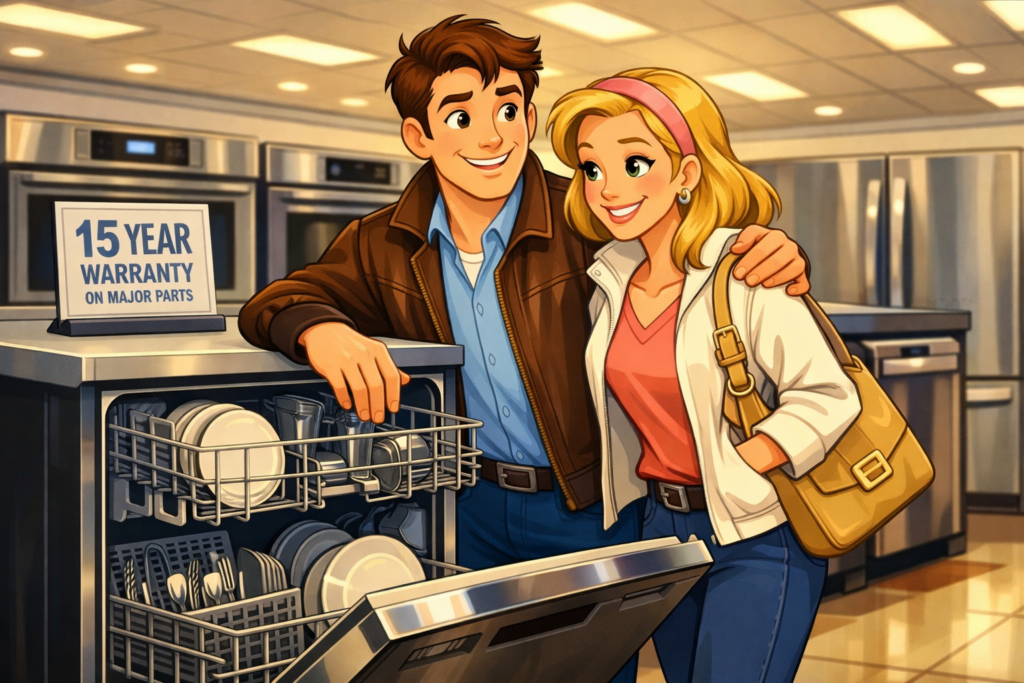
Buyers aren’t idiots, and they know it.
An appliance retailer near me ran ads reminding consumers that the expected life of a dishwasher is five years.
A salesperson in a big-box store told me the same thing about a refrigerator.
Five years.
That framing is absurd. My grandmother’s first dishwasher lasted over fifty. Her fridge too.
Pretending modern buyers should accept radically shorter lifespans (plainly for their own gain) is condescension, not realism.
And buyers feel it.
Here are the real stats, in case you’re curious:
Home Appliance Life Expectancy
| Life Expectancy (Years) | Low | High | Average |
| Dryers | 11 | 18 | 14 |
| Dishwashers | 9 | 16 | 12 |
| Garbage Disposals | 10 | 15 | 13 |
| Freezers | 12 | 20 | 16 |
| Refrigerators | 10 | 18 | 14 |
| Washing Machines | 8 | 16 | 12 |
(As reported in the 23rd annual portrait of the U.S. appliance industry.)
In 2024 and 2025, right-to-repair rules stopped being theoretical. In the EU and several U.S. states, enforcement has made parts availability, repair manuals, and stated service life visible at the moment of purchase.
People are now asking “can this be fixed?” before buying, not after it breaks.
This mentality has changed buying psychology.
Repairability is no longer a virtue signal.
Now it’s a risk filter.
Products that feel hard to fix now feel like bad, short-term bets. That affects willingness to pay, upgrade timing, and trust, even for buyers who would never call themselves activists.
Shortening expectations does nothing to lower friction. It raises suspicion in the product, its maker and anything they say.
The sharper question for product makers is this:
What design cues, documentation, or signals make YOUR product feel like a safe long-term object, and clearly not a disposable one pretending otherwise?
Want to make your product irresistible? That’s what we do as product marketing consultants at Graphos Product, helping innovators turn need-driven ideas into market-ready successes.