
Yesterday Amazon confirmed what buyers have been showing us for years: screens didn’t replace stores, but exposed what stores still do best.
For a decade, “digital-first” was treated like destiny.
Online was destined to win.
Physical would fade.
Stores would either become showrooms or disappear.
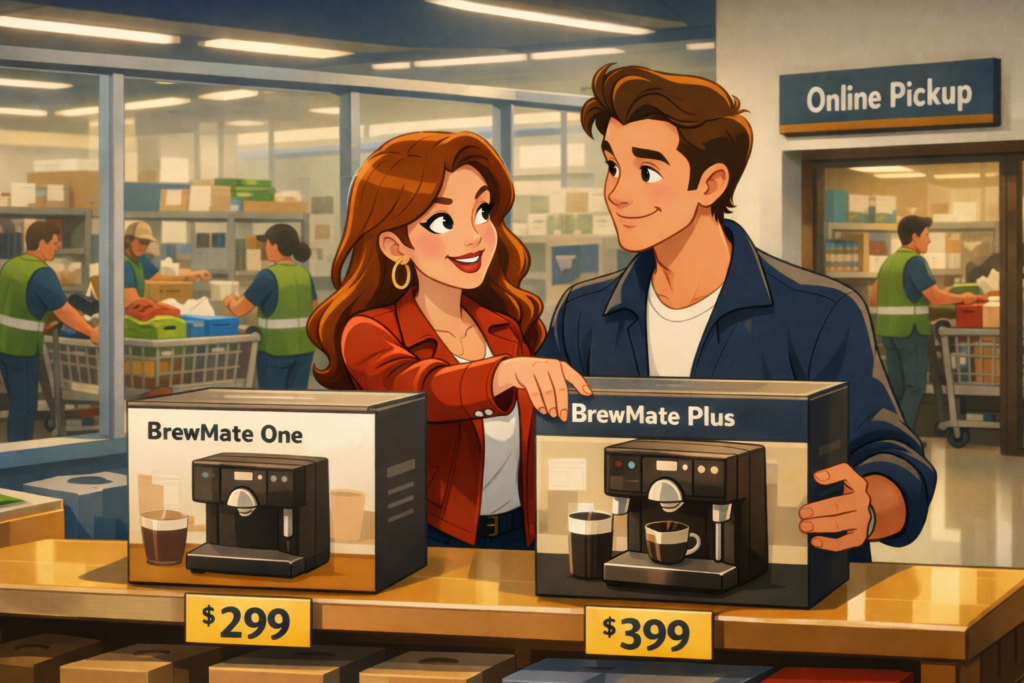
Then yesterday Amazon announced its largest retail store ever: a 230,000-square-foot big-box location outside Chicago.
Half retail, half fulfillment.
Two separate entrances, two separate jobs.
Why a hybrid like that?
Well, more than 80% of U.S. retail sales still happen in person.
Not because folks refuse to shop online or that they can’t, but because physical space delivers things screens don’t: trust, immediacy, confidence, error recovery.
What Amazon is really building in Illinois is something other than a big two-way store.
It’s infrastructure: a place were buying, picking up, returning, and replenishing collapse into one coordinated system.
And that’s the signal product makers should pay attention to.
“Digital-first” thinking assumes discovery is the hard part.
It isn’t anymore. Commitment is.
Physical presence reduces perceived risk.
It reassures buyers that a brand is real, accountable … and here tomorrow if something goes wrong.
That’s why even the most powerful e-commerce company on earth still needs concrete, aisles, and real shoppers.
Maybe the future isn’t online versus offline.
It’s designed overlap.
Want to make your product irresistible? That’s what we do as product marketing consultants at Graphos Product, helping innovators turn need-driven ideas into market-ready successes.