
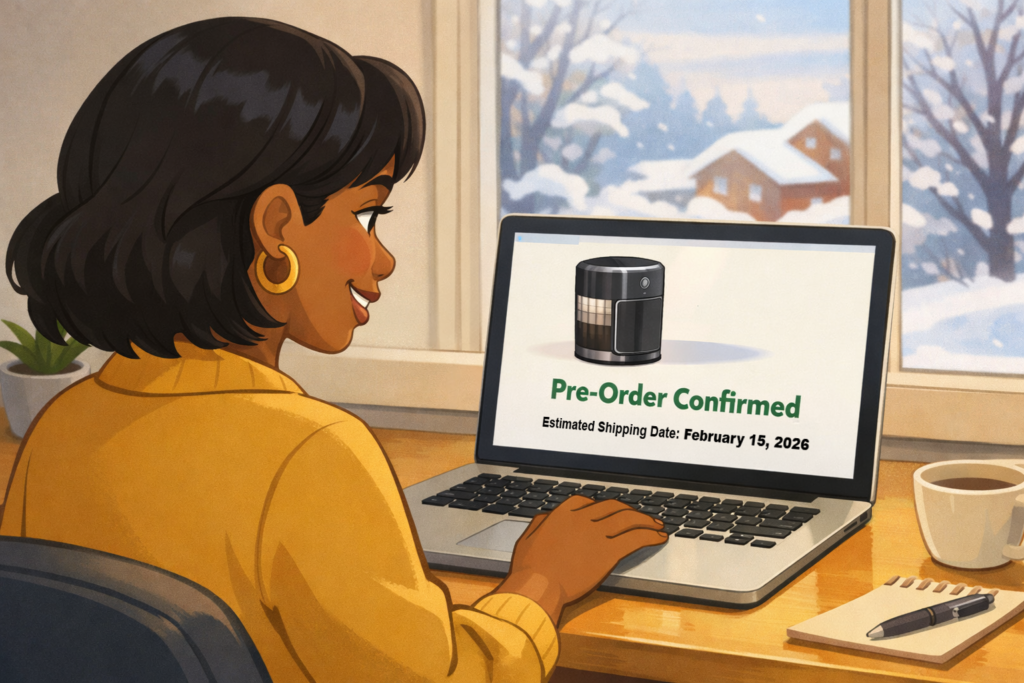
Pre-orders are becoming one of the safest ways to launch physical products.
I have seen this pattern increase across categories.
When given the option, many customers legitimately like to pre-order. Not begrudgingly or impatiently.
Happily.
They want a guaranteed place in line.
They want to feel early and proactive … not rushed.
And they want to put the ordering process behind them, now.
Tools like Shopify’s pre-order and reservation plugins have made this far easier to do without surprises or operational fallout.
But the BIG shift has happened inside buyers’ heads.
“Pretail” has moved beyond hype and into something more useful.
Selling before a product exists is not a sketchy marketing stunt or an “oh, crap, the shipment got delayed!” response.
It can be a demand filter.
In 2026, pretail has become a way to align production with reality.
Real money.
Real buyers.
Real time. (And in this case, ahead of time.)
It lets product makers size initial runs, reduce overstock risk, and avoid guessing which variant or configuration will actually move.
That changes how you design products.
High-confidence pre-orders reward clarity over completeness.
They favor strong core benefits over edge features.
They encourage phased releases instead of all-or-nothing launches.
AND they surface pricing sensitivity early … when it is cheapest to adjust.
Pretail works best when it is treated as a product strategy, and not trick or a fix for a fulfillment problem.
The main question is this:
If pre-orders are your first market test, how should your product, pricing, and release cadence be shaped to earn commitment and solidify trust?
Want to make your product irresistible? That’s what we do as product marketing consultants at Graphos Product, helping innovators turn need-driven ideas into market-ready successes.