
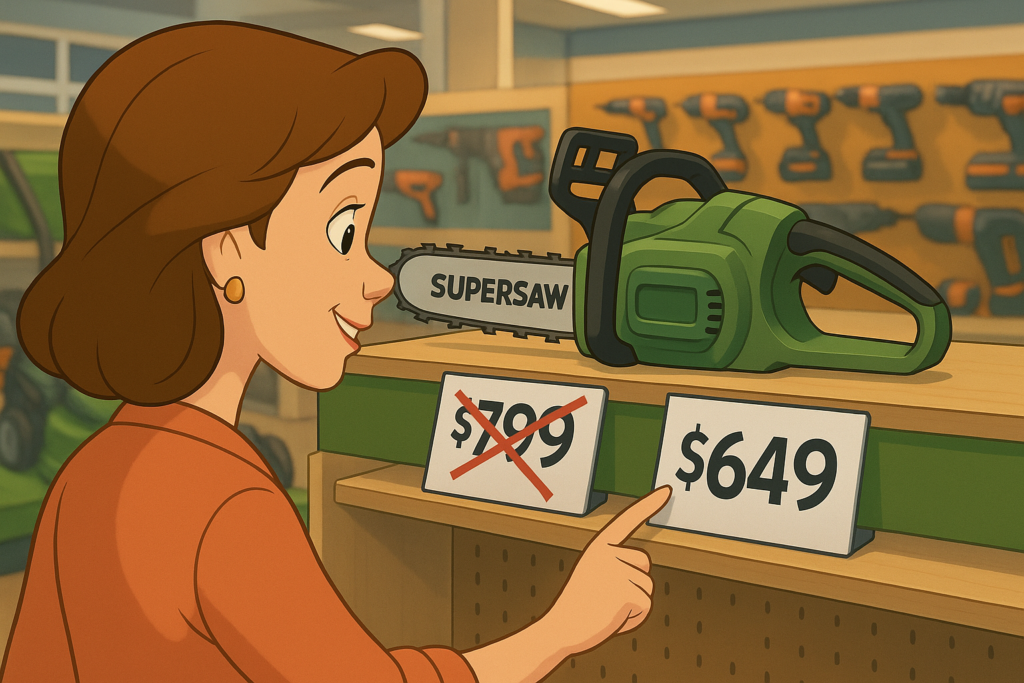
Horizontal placement changes perceived value before a buyer even reads the number.
A while back I wrote about vertical price placement and how numbers placed above a product feel higher, while numbers placed below feel lower.
Today let’s take the next step, because the horizontal axis has its own psychology and it is surprisingly powerful.
A 2025 study ran multiple lab experiments comparing how people interpreted two prices presented side by side.
Regular on the left, sale on the right.
Then reversed. Same numbers, same product.
Completely different perception.
When the regular price sat on the left, people judged the product as higher quality and their internal “reference price” shifted upward.
They were willing to pay more even before considering features.
Reverse the order and the perceived value dropped.
This happens because we read left to right, so the leftmost price becomes the anchor.
The anchor sets the quality expectation.
Everything to the right adjusts from that starting point.
As a small product maker (or a huge one) you can use this without touching engineering, materials or design.
Put the higher reference price on the left when you want to elevate perceived value.
Pair it with a benefit frame when you want to shift attention from cost to outcome.
Early launches and limited runs are especially responsive to this trick.
You control the frame. And the frame shapes price perception.
Want to make your product irresistible? That’s what we do as product marketing consultants at Graphos Product, helping innovators turn need-driven ideas into market-ready successes.